
Regulatory intelligence insights
Guides, comparisons, and expert analysis on regulatory monitoring, compliance strategy, and the tools that help teams stay ahead of regulatory change.

Denmark: Act No. 764 of 8 September 2026, gazetted 9 September, amends the hvidvasklov. Law firms must add CPF and sanctions freeze controls by 15 September 2026.

On September 9, 2026, South Korea's MOLIT opened a 13-day consultation on draft amendments to four aviation-safety rules: safety data, SMS, reporting and SSP.

Qatar's GTA will approve sweetened-drink analysis certificates on Dhareeba from November 1, 2026, ending manual attachment.

Singapore's Finance (Income Taxes) Bill 2026, read first September 8, 2026, adds a 300% AI deduction, a YA2026 corporate rebate, and Pillar Two MMTA amendments.

Ukraine's Draft Law 16051, filed September 7, 2026, applies VAT to cross-border distance sales via postal and express shipments. Sellers and couriers must prepare.

US OFAC grounded 27 Iranian airlines on September 8, 2026, suspending Iran General License J-1 and issuing wind-down General Licenses 37 and DD for affected parties.

South Africa gazetted GoN 4133 on 4 September 2026, substituting the Merchant Shipping Act Second Schedule with consolidated SOLAS 1974 text, now in force.

Canada CBSA enforces the U.S. Surtax Order (2026) from September 8, 2026. Importers of U.S. goods must declare a 15, 25 or 50% surtax via CARM codes 26186A/B/C.

The EU Commission published the first ATMP JCA on September 7, 2026, covering onasemnogene abeparvovec (Itvisma) for 5q SMA in patients 2 years and older.

France's DGDDI fully decommissions DELTA X Import on 15 September 2026. Invalidation then moves to paper DI2D and DR2D; export followed by transit also goes live.

Hong Kong SAR opened a 4 September 2026 consultation to amend Cap. 132U: polyols in scope, 12 new sweeteners and over 900 MPLs. Comments close 4 December 2026.

Serbia opened a 7 September 2026 consultation on a Draft Law on Official Controls. Comments close 27 September 2026. Agri-food operators should file views now.

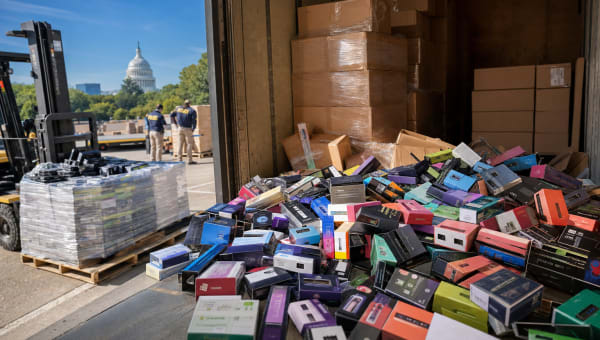
Taiwan HPA opens 431 anonymous e-cigarette surrender sites from September 8, 2026, ahead of a pending NT$30,000 to NT$100,000 possession fine.

Oman's Royal Decree 68/2026 amends the in-force Personal Data Protection Law. Controllers of Oman-resident data must review consent, retention and transfer duties.

Chile's Senate began voting on the Sala Cuna Universal bill (Boletin 14782-13). The vote resumes September 8 and extends childcare rights to all workers.

China's MEE issued Guohuan Gui Qihou [2026] No. 1 on September 2, 2026, setting national ETS allowance caps for power, steel, cement and aluminium smelting.

United Kingdom: From 1 October 2026, SI 2026/954 doubles the employment tribunal claim time limit to 6 months under Section 152 of the Employment Rights Act 2025.

US EPA draft TSCA risk evaluation for 1,2-dichloropropane preliminarily finds unreasonable risk to workers and consumers; comments due November 3, 2026.

US OFAC blocked Turkiye's Golden Global Investment Bank and two affiliates on September 4, 2026 and issued Iran General License CC for wind-down transactions.

EU Council gave final approval on 3 September 2026 to the recast Union Customs Code, making non-EU e-commerce platforms the importer of record, with fines up to 6%.

On September 2, 2026, the Netherlands issued its government response for the Pay Transparency bill (dossier 36949), advancing EU Directive 2023/970 toward a vote.

Turkey's SGK Announcement 2026/34 amends the reimbursable medicines list under SUT Article 12, effective September 4, 2026. Pharma MAHs must review status changes.

US OFAC added Banco Exterior de Cuba and oil and nickel SOEs to the SDN List under E.O. 14404 on September 3, 2026, and issued Cuba General License 4A.

Chile's Senate filed Boletin 18623-07 on September 1, 2026, amending data protection law Ley 21.719 and its APDP agency before the December 1, 2026 go-live.

China's CAC launched Phase 2 of its Qinglang AI campaign on September 2, 2026, targeting deepfakes, AI falsehoods and minor harm, with 5.61 million items removed.

EU Council endorsed temporary trade-liberalisation measures for Armenia on September 2, 2026, suspending duties on around 80% of Armenian exports for two years.

United Kingdom: OFSI fined Citibank's London branch GBP 4.73M on 2 September 2026 for making funds available to a designated person under Russia and GAC sanctions.

Iceland's Regulation 950/2026 on aviation obstacle marking and lighting took effect September 2, 2026, imposing marking and lighting duties on 50 m+ structures.

Japan's MIC published 11 comments on a draft Notification No. 42 amendment raising 76 GHz radar antenna power to 1 W where EIRP stays at 50 dBm or below.

Liberia presented its validated National Carbon Market Policy to President Boakai, giving the Carbon Markets Authority exclusive power over carbon-credit trading.

Turkey's GKGM published a draft Turkish Food Codex Beer Communiqué for public consultation on September 2, 2026, with feedback due by September 30, 2026.

Taiwan MOENV amended carbon fee and reduction plan rules on September 1, 2026, tying newcomer fee duty to a GHG baseline and barring double-counted subsidies.

Australia's AICIS 2026 Categorisation Guidelines apply from September 1, 2026, adding 293 high-hazard and 5 developmental-toxicity chemicals. Recategorise now.

China's CAAC seeks comments by October 8, 2026 on draft rules requiring airlines, airports and ATM to share operations data, with fines up to RMB 30,000.

EU Directive 2024/825 applies from September 27, 2026: generic green claims, offset-based climate-neutral claims and self-created labels become unfair practices.

EU Commission sets the evidence importers must file to prove the melt-and-pour country of steel under the Steel Regulation, applicable from October 1, 2026.

Montenegro's September 1, 2026 decree sets binding criteria for adding and removing medicines from the basic and supplementary reimbursement drug lists.

Malaysia's MCMC opened a public consultation on September 1, 2026 on international roaming and eSIM connectivity rules. MNOs, MVNOs and eSIM providers must respond.

Norway: from 1 September 2026 DORA replaces IKT-forskriften for finance companies, debt collectors, real-estate brokers and Norsk naturskadepool.

US FDA's September 2026 draft guidance withdraws the 2003 hepatic impairment pharmacokinetics rules and opens a 90-day comment window for drug and biologic sponsors.

China enacted the Healthcare Security Law August 28, 2026, effective January 1, 2027, codifying medical, long-term care and maternity insurance duties.

On August 31, 2026, the EU Commission designated ChatGPT as a VLOSE and Reddit, Roblox as VLOPs under the DSA, with compliance due by end of December 2026.

Croatia's new rules of the air ordinance, gazetted 24 August 2026, enters into force 1 September 2026, aligning national flight rules with SERA Regulation 923/2012.

Japan's MIC cleared the way for a 700 MHz satellite-to-phone ordinance on August 31, 2026, after the Radio Regulatory Council approved the draft amendments.

Egypt issued work organization bylaws under Labour Law 14/2025 on September 5, 2026. Private sector firms must align contracts, hours and leave.

Oman's TRA mandates passive telecom cabling in new and renovated buildings, with 500-800 OMR fines. Most rules apply 6 months after the 30 Aug 2026 gazetting.

Oman's TRA Decision 9905/2026, gazetted August 30, 2026, replaces Decision 145/2008. Recipients pay RO 1.5 to TRA and RO 1.5 to the donor per completed port.

Denmark: Bill L 12 B moves tobacco and e-cigarette age-verification oversight to Erhvervsstyrelsen and extends mystery-shopping inspections to June 30, 2028.

EU: EFRAG published the 2026 Draft List of ESRS Datapoints on August 28, 2026. Flag fatal flaws by October 23; final list due by year-end for FY2026 CSRD.

US FDA on August 26, 2026 approved Rasonque (daraxonrasib), a first-in-class RAS inhibitor for adults with metastatic pancreatic adenocarcinoma after prior therapy.

The US EPA's August 28, 2026 draft TSCA risk evaluation finds unreasonable risk in 20 of 25 uses of trans-1,2-dichloroethylene, opening a 60-day comment period.

Vietnam's Standing Committee on August 27, 2026 flagged legal-gap risks in the draft Maritime and Inland Waterways Code after a proposed 65% cut.

On August 25, 2026, China's NPCSC began first review of a Road Traffic Safety Law draft shifting AV liability to makers and mandating compulsory insurance.

China's NPCSC opened the Healthcare Security Law third reading on August 25, 2026, adding vulnerable-group subsidies, long-term care insurance and settlement rules.

Germany's Federal Cabinet adopted key points for a Heating Grid Package on August 26, 2026, consolidating district heating rules and adding federal price oversight.

Indonesia's Baleg approved the Labor Protection Bill on August 26, 2026, advancing it to DPR plenary as a parliamentary initiative before the Oct 31 MK 168 deadline.

Japan's MIC seeks comments through September 29, 2026 on draft Kokuji No. 88 amendments to Giteki characteristic test methods for specified radio equipment.

Qatar's MOPH issued Circular PDC/2026/31 on August 25, 2026, prohibiting the handling, distribution, use and promotion of unlicensed peptides.

Turkey's SGK published Announcement 2026/33 amending the reimbursable pharmaceuticals list (EK-4/A) under SUT Article 12; annexes apply August 28, 2026.

US OFAC on August 27, 2026 amended eight Venezuela GLs covering oil, minerals, PDVSA and telecom, plus FAQs. Re-baseline authorizations before the next trade.

Albania opened consultation on a draft MRV regulation for maritime greenhouse gas emissions, approximating EU Regulation 2015/757 for ships at Albanian ports.

China CNCA Announcement No. 18 of 2026 opens second-batch CCC body and lab designation for fuses, tools and auto parts; applications close September 9, 2026.

On August 25, 2026, China's NPCSC began the second reading of the Lawyers Law amendment, revising it to protect parties' rights and develop foreign legal services.

South Korea's MOLIT Notice 2026-457 (Aug 26 2026) amends the Aviation Medical Certification Regulations to align aeromedical exam standards with ICAO.

US EPA finalized TSCA Significant New Use Rules on August 26, 2026, mandating 90-day notice before designated new chemical uses begin. Effective October 26, 2026.

US FDA on August 25, 2026 authorized Abbott's Libre Duo 10 Day, the first wearable for continuous dual glucose and ketone monitoring, with De Novo special controls.

US OFAC designated five SDGT counter-terrorism targets on August 26, 2026 and issued GL 36 (wind-down) and Russia GL 104B (diamond imports).

Albania's Law 84/2026 amends the Maritime Code to add VTMIS, a National Maritime Single Window and ISPS port security duties for operators in Albanian waters.

Iraq's Security and Defense Committee on August 24, 2026 advanced the Combating Information Technology Crimes draft and will host experts before finalising the text.

Netherlands: on August 24, 2026 the Council of State flagged UNCLOS and enforcement gaps in the Foreign Ships Act shadow fleet bill before parliament.

On August 24, 2026, US OFAC rescinded Syria's SST designation and revoked GL 25 while suspending Iran GLs F and G and adding a large Iran SDN batch.

Switzerland sets ChemV Annex 2/3 CLP and SVHC update for February 1, 2027 on the Anmeldestelle revisions list; the dedicated page still shows September 1, 2025.

EU Commission guidance tells CBAM verifiers how to get NAB accreditation and Registry access from 1 September 2026, ahead of January 2027 verification reports.

Ireland's Revenue issued Part 38-03-38 guidance on DAC8 and CARF crypto reporting. RCASPs must collect 2026 data and file the first return by May 31, 2027.

US: FCC proposes first 2.939(e) ban on importing and marketing previously authorized covered UAS, comments due September 23, 2026.

Vietnam published the auction notice and regulation for 900 MHz paired-band spectrum usage rights on August 23, 2026, with the auction set for September 9, 2026.

Vietnam's Decree 330/2026, in force August 19, 2026, sets administrative fines up to 70 million VND for personal data protection violations under the PDPL.

South Africa gazetted GN 7845: the CAR 36th Amendment activates the SA-CATS 43 Condition Monitoring Programme under Parts 91 and 43 for private piston aircraft.

Saudi Arabia's 21 August 2026 marine and coastal environment executive regulation sets permitting, vessel reporting duties and fines up to SAR 20 million.

China's NPCSC reviews a draft Lawyers Law amendment ahead of the August 25 to 28 reading; it codifies GBA cross-border practice and tightens conduct norms PRC-wide.

Japan MIC seeks comments by September 25, 2026 on draft technical conditions for virtualized and third-party telecom equipment under Inquiry No. 2020.

South Korea's MOLIT amended Directive No. 1982 on foreign carrier permit safety reviews on August 21, 2026, effective the same day.

Senegal's National Assembly unanimously adopted Bill No. 25/2026 on critical information infrastructures and digital security on August 20, 2026.

US OFAC's Venezuela General Licenses 61 and 62, issued August 21, 2026, authorize telecom goods, services and contingent investment contracts; FAQ 1266 on scope.

US IRS proposed rules published August 21, 2026 define eligible investments for Trump Accounts under IRC section 530A, cap fees at 0.1 percent and exclude ESG funds.

Colorado's AG set a September 4, 2026 comment deadline for proposed ADMT and Chatbot Safety rules (SB 26-189, HB 26-1263); a revised draft is due by September 23.

Vietnam's NA panel opened preliminary review on August 20, 2026 of a draft Maritime and Inland Waterways Code merging the 2015 Maritime Code and Inland Waterway Law.

China's Network Data Security Risk Assessment Measures took effect August 20, 2026. Important-data handlers must file annual risk reports within 20 working days.

Egypt Decree 322/2026 makes visual inspection sufficient for GOEIC-registered imports and accepts ILAC-accredited certificates, cutting redundant testing.

EU Commission adopted COM(2026)565 on August 20, 2026, simplifying energy and tyre label rules and EPREL registration. Feedback closes October 15, 2026.

France recalls Tavneos (avacopan) from August 19, 2026 after the EU withdrew its marketing authorisation on August 4. It can no longer be prescribed or dispensed.

Ukraine enacts Decree 744/2026, imposing NSDC personal special economic sanctions on Annex 1 individuals and Annex 2 entities, with EU and US mirroring sought.

US FDA on August 19, 2026 authorized the Aletta, the first robotic blood draw device, with De Novo special controls for labeling, performance and clinical testing.

EU draft delegated act under Regulation (EU) 2024/1157 green-lists waste for intra-EU recovery shipments. Feedback closes September 15, 2026; adoption Q4 2026.

Turkey's GKGM proposed a Food Codex communiqué on fruit juice, capping nectar sugar at 10-20% and aligning with EU Directive 2001/112/EC. Comments due 25 September.

Turkey's SGK issued Announcement 2026/32 on August 19, 2026, amending the reimbursable drugs list under Article 12, effective from August 21, 2026.

Ukraine: on August 19, 2026 the Verkhovna Rada passed draft law No. 15450, a new 781-article Customs Code aligned to EU rules, in force from December 1, 2027.

US FDA opened its first framework for generative AI-enabled medical devices on August 18, 2026. Comments under docket FDA-2026-N-7874 are due October 19, 2026.

EU: Commission opened a Directive 2016/680 (LED) call for evidence on August 17, 2026. Feedback closes September 28, 2026 ahead of a Q3 Communication.

Sweden: on August 18, 2026 Naturvårdsverket briefed textile, footwear and furniture firms on ESPR Article 25, Digital Product Passports and upcoming EPR.

US EPA draft TSCA evaluation finds unreasonable worker risk from ethylene dibromide in 10 of 12 conditions of use. The 60-day comment window opened August 18, 2026.

On August 18, 2026, US OFAC designated two ICC individuals and one Venezuela entity on the SDN List, issuing General License 12 for wind-down transactions.

Angola's APD fined Hotel Diamante USD 115,000 under Lei 22/11 for processing client data without prior authorisation and weak security. What controllers must do.

On August 15, 2026, China's Ecological and Environmental Code entered force, elevating new chemical substance registration to statute and repealing MEE Order 12.

Ireland mandates addressee registration for online service providers by 18 August 2026 under the EU e-Evidence Regulation. Here is what changes and who must act.

Netherlands: Council of State flags risk-based supervision, discrimination and data-protection gaps in the AML Implementation Bill before parliament.

US FDA reclassifies oncology ISH companion tests from class III PMA to class II 510(k) with special controls at 21 CFR 864.1890, effective September 16, 2026.

Iraq's parliament moved the Lawyers Law (No. 173) amendment to a second reading on August 10, 2026, reshaping admission, licensing, secrecy, conduct and oversight.

Oman's TRA issued Decision 1152-10 on August 16, 2026, binding telecom licensees and commercial senders to new consent, opt-out and VAS subscription rules.

Brazil: ANPD first AI sandbox consultation on August 13, 2026 sets four risk themes for AI under the LGPD. What vendors and DPOs must watch.

China's MEE consults on three draft CCER methodologies for reforestation, forest management and geothermal heating. Comments close August 25, 2026.

On August 14, 2026, the EU published CBAM definitive-period guidance on actual embedded emissions, the free allocation adjustment and six in-scope sectors.

Finland's Findata backs the draft bill implementing EHDS secondary-use rules and its Health Data Access Body role, but wants opt-out centralized in MyKanta.

Malaysia: BNM and SC issued NSRF guidance for FIs and adopted the ASEAN Taxonomy as the base for the Malaysia Taxonomy, with reporting from 2028.

Norway's Advokattilsynet on August 14, 2026 flagged AMLA's draft RTS under AMLD6 Art. 40(2) on non-financial AML risk assessment; comments close September 27, 2026.

US FCC seeks comment by September 14, 2026 on CTIA petitions to reconsider counter-drone (C-UAS) spectrum rules in GN Docket 26-74. Reply comments due September 29.

Kosovo's AAC formalized two EASA Working Arrangements on August 14, 2026, opening direct technical cooperation and a path into the EU SAFA ramp-inspection cycle.

Germany: BMUV confirms VerpackDG and PPWR apply from August 12, 2026. ZSVR authorisation, 2028 recycling quotas and conformity declarations now bind producers.

EU initiative 19033 opens the PPWR Art. 7(9) delegated decision on plastic recycling sustainability criteria, with Commission adoption planned for Q4 2026.

Mexico's AFAC published binding bases for allocating takeoff and landing slots at Level 3 saturated airports in the DOF on August 13, 2026, in force from August 14.

US EPA draft TSCA evaluation finds unreasonable worker risk from o-dichlorobenzene in 14 of 24 conditions of use. The 60-day comment window opened August 13, 2026.

Australia's ACMA consults on remaking the Broadcasting Services (Technical Planning) Guidelines 2017 before their 1 October 2027 sunset. Closes 23 September 2026.

Brazil's ANPD ordered Discord on August 12, 2026 to suspend Go Live streaming nationwide within 3 business days under the ECA Digital, pending child-safety proof.

Colombia: MinHacienda draft decree of August 11, 2026 postpones renta and withholding deadlines for taxpayers in earthquake-affected DIAN seccionales.

EU Regulation 2026/1738 on end-of-life vehicles enters into force August 13, 2026, setting recycled-content, EPR, design and export rules for automotive actors.

Turkey SGK Announcement 2026/31 amends the EK-4/A reimbursable drugs list from August 14, 2026: one addition, three amendments, one passivation, four removals.

Brazil's ANPD sets September 17, 2026 for platforms with over one million under-18 users to publish the first ECA Digital transparency report under Law 15.211/2025.

From August 12, 2026, the EU PPWR bans PFAS in food-contact packaging above strict limits. Wrappers, containers and pizza boxes must comply to stay on the market.

United Kingdom: £200 tobacco and vape fixed penalty notices apply from October 29, 2026, with nation-specific offence lists and early-payment discounts.

Mexico's SHCP published new LFPIORPI General Rules in August 2026, imposing a risk-based AML framework on lawyers, notaries and other obliged entities.

US FDA on August 10, 2026, proposed reclassifying digital breast tomosynthesis systems (OTE) from class III PMA to class II 510(k); comments close October 9, 2026.

Brazil's ANPD opened an ECA Digital enforcement case against Discord on August 7, 2026 over child-safety failures: age checks, takedown, reporting.

Australia opened the 2026-27 Safeguard Mechanism review on August 7, 2026; feedback on post-2030 baselines and trade-exposure rules is due by September 18, 2026.

Belgium's July 22, 2026 Law, published August 7, 2026, transposes EU Directive 2024/1619, bringing ESG risk and supervisory rules to Belgian banks and insurers.

China's CAC seeks comments by September 7, 2026 on draft Provisions imposing a self-declaration duty on handlers processing 10 million or more individuals' data.

EU Safety Gate SR/02152/26 (6 Aug 2026) flags Pixi Endless Silky Eye Pen for perfluorononyl dimethicone under POP and REACH; Danish stop of sales from Feb 2025.

Iceland's Ministry of Health published Regulation 879/2026 on healthcare internal controls, in force 8 Aug 2026, with full procedures required by 1 Jan 2027.

Japan's MIC is taking public comments to September 10, 2026 on Radio Act standards enabling Globalstar C-3 mobile satellite terminals in Japan.

US FCC Third Further Notice (FCC 26-50) proposes HBOM/SBOM disclosure, Covered List bifurcation and a US-based liable party. Comments due September 8, 2026.

US FDA on August 6, 2026, granted accelerated approval to Tudriqev plus nivolumab for anti-PD-1 refractory advanced melanoma, with confirmatory trials required.

China's CAC opened a formal cybersecurity review of Palo Alto Networks products sold in China on August 6, 2026, turning January's vendor steer into a binding probe.

China's MEE stops new chemical substance record-filings from August 15, 2026; former record-filing cases must now use simplified registration under Order No. 12.

South Korea's National Assembly received Bill 2220466 on August 5, 2026, adding transport cooperatives as eligible applicants for MOLIT AV suitability approval.

Poland's June 2026 Labour Code amendment redefines mobbing, broadens discrimination and requires employers with 10+ staff to adopt anti-mobbing rules by 5 May 2027.

Germany's LuftVG Section 19e authorizes biometric digital check-in, baggage drop and boarding at German airports, with consent and a 3-hour deletion cap.

Iceland opened consultation on a draft Digital Health bill creating a central unit for shared health-data infrastructure, interoperability and security.

Switzerland's BAG published new Spezialitaetenliste decisions: Ofev limit changes from August 1, 2026, plus Lynparza and Polivy admissions from July 1, 2026.

The European Commission published its PPWR FAQ on August 3, 2026, nine days before the EU packaging regulation applies on August 12.

Japan's MIC seeks comments to Sep 8, 2026 on Radio Act ordinances on portable base stations, Sub6 blanket-license expansion and RedCap and 5G antenna-power rules.

South Korea's MOLIT opened a 20-day consultation on August 4, 2026 on a partial amendment to aviation medical certification rules; comments close August 24, 2026.

Montana proposes MAR 2026-131, aligning pharmacy compounding with USP 795/797/800/825 and adding sterile-compounding and outsourcing facility endorsements.

Germany named BaFin AI Act market surveillance authority for banks, insurers and investment firms from July 29, 2026, covering chatbot transparency and high-risk AI.

Germany promulgated the KI-MIG on 28 July 2026 to enforce the EU AI Act, naming BNetzA as central AI supervisor and BaFin, BfArM, KBA as sectoral authorities.

EU: PRAC adds a meningioma contraindication to desogestrel and etonogestrel products and updates Jaydess on ectopic pregnancy, with MAH deadlines from August 2026.

Netherlands Bill 36864 transposes EU IED 2.0 (Directive 2024/1785) and the PIE Regulation into the Omgevingswet, expanding BAT-AEL permits for 5,000 installations.

The US FCC proposes to bar import and marketing of previously authorized military-grade foreign drones and components; comments close September 2, 2026.

EU AI Act enforcement and Article 50 transparency start August 2, 2026: AI disclosure, deepfake labels, machine-readable marks, live complaint tools.

SBTi's global call for evidence on FLAG Standard V2 opened July 30, 2026 and closes October 8. FLAG companies can use Corporate Net-Zero Standard V2 tools now.

US FDA July 2026 draft guidance (FDA-2026-D-4272) expands container closure and device constituent part expectations for biosimilar and interchangeable products.

US FCC on July 28, 2026 added foreign power inverters and advanced robots to the Covered List, barring new authorizations without Conditional Approval.

The UAE EDE published Federal Decree-Law 27/2026 on July 27, 2026, setting a Good Pharmacovigilance Practice standard for medical products that MAHs must now meet.

China's MEE opened consultation on July 27, 2026 on the national ETS allowance allocation plan for power, steel, cement and aluminum. Comments close August 5, 2026.

The European Parliament has scheduled a 14 September 2026 plenary first reading on the EU proposal extending CBAM to 180 downstream steel and aluminium goods.

EU: Commission published first CRA guidance C(2026) 5252 on July 27, 2026, clarifying scope, support periods and reporting before the September 11, 2026 deadline.

EU Regulation 2026/1744 (Digital Omnibus on AI) entered into force on 27 July 2026, deferring AI Act Annex III high-risk rules to 2 December 2027.

EU Regulation 2026/909, in force since May 18, 2026, caps Benzyl Salicylate and Citral, bans Triphenyl Phosphate and rewrites aluminium and zinc limits in cosmetics.

France's July 16, 2026 order imposes PFAS abatement, monthly sampling and a 4.4 ng/L PFOA-equivalent limit on ICPE 2790/2791 liquid waste sites from July 26, 2026.

United Kingdom CAA consultation on the VTOL regulatory framework (CAP3267 A-E) closes July 31, 2026, covering CMPA, airworthiness, licensing and flight operations.

Germany's UBA classified QAV, chlorinated organophosphate flame retardants, AHTN, DCD and 3-MP as relevant trace substances in water on July 24, 2026.

The European Commission sent TikTok preliminary findings that its minor accounts breach DSA rules on default settings and For You Feed recommendations.

US FCC adopted a Third Report and Order on July 22, 2026 closing the component-part loophole: new devices with Covered List components cannot be authorized.

US FCC updated its Covered List on July 24, 2026, adding Exedy, Parallel Flight, Humax and Askey Conditional Approvals plus Calix and Sagemcom class broadenings.

Bulgaria's parliament adopted the 2026 NHIF budget on July 22, 2026, setting a EUR 1.334bn envelope for medicines and devices and an 8.5% NHIF spending rise.

China's CAAC opened a July 23, 2026 consultation to fold the 2025 major safety-hazard standard into CCAR-398-R1 as a binding annex; comments close August 23.

The EU Commission fined Google EUR 890M on July 22, 2026 under the DMA for Google Search self-preferencing and Google Play anti-steering, with 60 days to comply.

EU initiative #18807 drafts a delegated regulation under RED Directive 2014/53/EU updating wired charging specs and the label, adoption planned Q1 2027.

Cameroon acceded to the WHO illicit tobacco trade protocol on July 21, 2026. It enters into force for Cameroon on October 19, 2026, bringing supply chain duties.

China's STMA updated its 2026 e-cigarette technical review guidelines on July 22, 2026, refining applicant conditions, required materials, and submission channels.

Colombia published a MinSalud draft Resolution on July 21, 2026 creating a national supply-monitoring system for medicines and devices with new stock reports.

France signed Decree 2026-636 on July 16, 2026 (JORF July 18), setting 342, 262 and 194 Mt CO2e/year carbon budgets through 2038 under SNBC 3.

US FCC updated its Secure Networks Act Covered List on July 21, 2026, adding new router conditional approvals and making drone exemptions open-ended for OEMs.

Colombia's CNPMDM issued Circular 023 of 2026, extending price monitoring to medical devices and placing medicated coronary stents under direct control.

EU Digital Product Passport Registry went live July 20, 2026 under ESPR. Operators must register product data; first deadline February 18, 2027 for large batteries.

EU corrigendum to Implementing Decision 2026/1425 replaces the recycled plastic calculation formulas and reporting tables for PET bottles under Directive 2019/904.

France's ANFR checked 80 mobile terminals in 2025: 9 SAR breaches, 8 admin non-conformities and 17 models under corrective measures under the RED.

Thailand's DCCE seeks comments by 27 July 2026 on the second LT-LEDS revision, the non-binding net zero 2050 pathway the Climate Change Act will operationalize.

The US FCC OET released DA-26-744 on July 20, 2026, instituting ET Docket 26-111 to withdraw recognition of SGS-CSTC Shenzhen (CN1336) under 47 CFR 2.951.

ACMA opened consultation on 20 July 2026 to amend the TLN 2025 and two draft 2026 customer equipment standards. Submissions close 17 September 2026.

From July 19, 2026 Germany enforces the EU ban on destroying unsold textiles: ESPR Article 25, OekodesignG fines up to EUR 100,000, Laender surveillance.

EU guidelines of 20 July 2026 clarify AI Act Article 50 duties for providers and deployers from 2 August 2026, with marking grace to 2 December for older systems.

EU Commission fined AliExpress EUR 550 million on July 19, 2026 under the DSA for failing to assess and mitigate risks of illegal and counterfeit products.

From July 19, 2026, large EU apparel and footwear companies cannot destroy unsold clothes and shoes under ESPR Article 25. Scope, exemptions and next steps.

EU: Commission Decision C(2026) 4743 grants two German firms a REACH chromium trioxide authorisation for functional plating, valid until November 2035.

Australia's TGA banned nicotine pouch imports through three access schemes from 24 July 2026 and barred pharmacy compounding, closing every legal supply route.

Australia's TGA seized almost AUD 750,000 of illegal vaping goods, nicotine pouches and tobacco in Darwin, reinforcing the pharmacy-only vape retail rule.

Japan: On July 16, 2026, MHLW issued a Food Sanitation Act Article 26(3) order requiring methamidophos testing of every Indian moringa immature seed-pod import lot.

On July 15, 2026, Germany's cabinet adopted the GeDIG government draft, advancing reform of DiGA reimbursement, the ePA, health data use and AI medical devices.

EDPB Binding Decision 1/2026 forces the Belgian DPA to rule on the merits of NOYB's VRT cookie banner complaint, rejecting an abuse-of-rights dismissal.

On July 15, 2026 the WHO FCTC Secretariat closed the global VIPRS peer review application round after receiving six Party applications under Decision FCTC/COP10(22).

EU Action Plan on Cybersecurity and AI, presented July 7, 2026, ties AI Act, CRA, NIS2 and RED 3.3 rules into one roadmap before August 2, 2026 enforcement.

The EU AI Act becomes generally applicable on August 2, 2026. AI medical device and IVD high-risk duties are deferred to August 2, 2028.

Council added the draft final act of the Digital Omnibus on AI on July 13, 2026, the last step before OJ publication and a conditional AI Act calendar reset.

EU initiative #18732 updates the General Safety Regulation Annexes to incorporate the new UN Regulation on Automated Driving Systems and June 2026 WP.29 outputs.

Indonesia's BPOM revoked izin edar permits for 14 cosmetic products containing mercury, hydroquinone and retinoic acid in its Q2 2026 enforcement sweep.

WHO FCTC reported on July 12, 2026 that global Protocol working groups on Article 6.5 input controls and Article 24 enforcement cooperation held first meetings.

On July 8, 2026 the EU signed the Digital Omnibus VII, deferring AI Act high-risk duties from August 2026 to December 2027 (Annex III) and August 2028 (Annex I).

European Commission consultation on CSDDD implementing guidelines closes July 24, 2026; adoption Q1 2027 ahead of July 26, 2029 application. 14 days to respond.

On 8 July 2026 the Commission published the second and third JCA reports under HTAR, on tarlatamab (Imdylltra) and lurbinectedin (Zepzelca) for ES-SCLC.

On May 5, 2026 the EU published Implementing Regulation 2026/977, fixing binding MDR/IVDR notified-body timelines and re-certification rules from February 25, 2027.

On July 10, 2026 the UK FSA and FSS published four guidance packs on cell-cultivated and novel foods, covering hygiene, microbiology, applications and taste trials.

On July 9, 2026, EU anti-fraud office OLAF and Europol dismantled a Spain-based illicit cigarette network, seizing 20 million cigarettes worth EUR 10 million.

EU Omnibus Act IX, WTO-notified on July 8, 2026, would ban 16 cosmetic ingredients and restrict CBD and BHA under Regulation (EC) No 1223/2009 from February 1, 2027.

United Kingdom HSE published its Agency Opinion on a UK REACH PFAS firefighting-foam restriction on July 9, 2026; socioeconomic comments close September 7, 2026.

Brazil's Anvisa opened Consulta Publica no 1.400 on July 8, 2026 to amend RDC 727/2022 packaged food labeling. Comments are due by October 15, 2026.

On 3 July 2026 the European Commission adopted the revised ESRS Delegated Regulation and the VSME voluntary standard. Here is what CSRD reporters must do.

On June 24, 2026 the Council of the EU agreed its SFDR 2.0 negotiating position, replacing Article 8/9 with three product categories. What compliance leads must do.

EU Regulation 2026/1546 lowers all carbendazim and thiophanate-methyl MRLs in citrus, mangoes, papayas and okra to the LOD, in force since 29 July 2026.

On July 7, 2026 the global Codex Alimentarius adopted precautionary allergen labelling guidance under CXS 1-1985, a risk-based benchmark for may contain labels.

South Africa debates its Tobacco Bill, Morocco enforces new IMANOR standards, Kenya fights over a flavour ban. See the five-country African compliance map.

SAHPRA, NAFDAC, Kenya's PPB and Egypt's EDA each run separate device rules in 2026, while the African Medicines Agency still needs 24 more ratifications.

Nigeria's NIMASA crackdown, South Africa's pending MARPOL rules and the IMO Net-Zero vote converge in 2026. What Africa maritime compliance teams must track.

Japan: NITE published FY2025 GHS results for 142 substances on July 3, 2026. They are non-binding reference for Japan labels and SDS, not a legal mandate.

Kenya banned 21 phone brands and mandated USB-C in February and March 2026, while Nigeria's NCC fined telcos 149 million naira for unapproved devices.

South Africa's mandatory carbon budgets, Nigeria's ISSB roadmap and Egypt's binding FRA rules reshape ESG compliance across Africa in 2026.

Egypt's GMO food grace period ends July 4, 2026 while Kenya finds maize aflatoxin at 500 ppb. What food safety teams must track across Africa's top 5 markets.

Nigeria rewrites its 1962 bar law, Morocco overhauls the avocat profession, South Africa switches exams. What legal compliance teams must track in Africa.

Nigeria digitalized pilot licensing in July 2026, Kenya gazetted 29 aviation rules, and CORSIA turns mandatory in 2027. What compliance teams must track.

PFAS bans, GHS adoption gaps and EU CBAM pressure reshape chemicals compliance across South Africa, Nigeria, Kenya, Ghana and Egypt in 2026.

Nigeria's new cosmetics policy, Egypt's ISO 22716 licensing rule and Kenya's EAC standards reshape cosmetics compliance across Africa in 2026.

South Korea: K-BPR Enforcement Rule (MCEE Ord. No. 48) entered force on July 1, 2026, revising biocidal approval and risk-assessment procedures under Act No. 21310.

Egypt's PDPL grace period ends November 2026, Kenya debates a dedicated AI Bill, Nigeria fines up to 10 million naira. What AI governance teams must track.

Qatar bans e-cigarettes outright, Saudi Arabia taxes them at 100 percent, Israel mandates black devices from September 2026. Five regimes, one region.

Kenya's 8 year import rule bit on January 1, Nigeria delayed VehCAP to August, and the AU approved automotive Rules of Origin in February 2026.

Saudi Arabia's 70% nationalization rule, UAE AML rewrite, Qatar's courtroom limits and Israel's AI ethics opinion. What legal compliance teams must track.

The UAE dissolved MOHAP's device functions into a new EDE in 2025 and ended single-distributor deals in 2026. What SFDA, EDE, MoPH and AMAR require now.

Hormuz war risk is 8x normal, Houthi Red Sea threats persist, and Mawani, UAE and Qatar enforce MARPOL differently. What compliance teams must track now.

Saudi Arabia's SASO 3114:2026 replaces GEN-002 by October 31, 2026. See how CST, TDRA, MoIAT, CRA and Israel's MoC each run separate type approvals.

SFDA added 21 banned ingredients in one 2025 circular, Israel scrapped its cosmetics license entirely. What Gulf and Israel compliance teams must track.

UAE, Qatar, Saudi Arabia and Israel run four different ESG regimes. Here is what changed in 2026 and how to track SCA, MOCCAE, QFMA, QFCRA, the CMA and CBAM.

Saudi Arabia scrapped warnings for food poisoning fines in December 2025. What SFDA, UAE's ZAD, Qatar's WATHEQ and Israel's NFS require from importers now.

Saudi Arabia, the UAE, Qatar and Israel run four separate aviation regimes. What changed in 2026 for drones, CORSIA and airworthiness, and how to track it.

Saudi Arabia, the UAE, Qatar and Israel each run separate chemical control regimes. Here is what changed in 2026 and how to track SASO, MOIAT, MOCCAE and PFAS rules.

Saudi Arabia, the UAE, Qatar and Israel run four separate type-approval regimes. What changed in 2026 for Euro 6b, UN R155/R156 and Israel's IMR.

DIFC Regulation 10 is live, Saudi PDPL enforcement hit 48 decisions, Israel overhauled its privacy law. What AI and data governance teams must track in the Gulf.

Brazil, Argentina, Chile and Colombia each run separate 2026 equipment homologation regimes, with no mutual recognition and a 6.27 million reais ANATEL fine.

Brazil and Mexico ban e-cigarettes outright while Argentina just legalized them in May 2026. See the five-country regulatory map for tobacco and nicotine.

Brazil's ANVISA formula and supplement deadline hits September 1, 2026 while Mexico, Colombia, Argentina and Chile each move on their own calendar. What to track.

Brazil's AI sanctions, Argentina's UIF deadlines, Chile's new data law. What legal compliance teams must track across South America in 2026.

Brazil, Colombia, Mexico, Argentina and Chile each reformed device or drug rules in 2026 on separate timelines. See what compliance teams must track now.

Brazil's NORMAM-401 penalties, the EU ETS full phase-in and the IMO Net-Zero Framework vote all converge in 2026. What maritime compliance teams must track.

Brazil rewrote its drone rules and cut oversight by 40% in the same month. Argentina deregulated, Chile tightened. What aviation compliance teams must track.

Brazil banned TPO and DMPT before the Andean Community did. Here is how ANVISA, ANMAT, Invima, ISP and COFEPRIS diverge on cosmetics compliance in 2026.

Brazil dropped mandatory ISSB reporting in 2026 while Mexico and Chile made it binding. See where each South American ESG disclosure regime stands now.

We put leading AI models through hundreds of complex regulatory tasks, alone and connected to a verified data layer. Accuracy went from 58 to 94 out of 100, and a cheap model connected beat every frontier model alone.

Benchmarked across the Claude models on current regulatory questions: accuracy rose from 59 to 94 out of 100 once connected to a verified data layer, with the lightest Claude matching the frontier one.

Benchmarked across the GPT models on current regulatory questions: accuracy rose from 54 to 95 out of 100 once connected to a verified data layer, with the smallest GPT matching the frontier one for under a cent a question.

Can AI handle CSRD, the ESRS and the EU Taxonomy? Across the ESG questions, accuracy rose from 72 to 90 out of 100 once models were connected to a verified, post-Omnibus data layer, each answer citing the official instrument.

Can AI handle REACH, UN GHS and the Stockholm Convention? Across the chemicals questions, accuracy rose from 53 to 95 out of 100 once models were connected to a verified data layer citing the exact decision and revision.

Can AI handle ISO 14155, ICH E6(R3) and the IMDRF guidance? Across the life-sciences questions, accuracy rose from 52 to 96 out of 100 once models were connected to a data layer citing the correct current edition.

Chile's data law takes full force December 1, 2026. Brazil, Colombia, Argentina and Mexico each move on a different clock. Where AI compliance stands now.

Brazil, Colombia, Chile, Argentina and Mexico each run separate chemical inventories and deadlines in 2026. See what compliance teams must track and when.

No South American market joined UNECE 1958. Brazil, Argentina and Chile each run separate 2026 certification, emissions and tariff regimes to track.

IMO CII cuts hit 11% in 2026, the Net-Zero Framework vote is December 4, and China still has not ratified the Hong Kong Convention. What to track now.

China's old SRRC certificates expired December 31, 2025, Australia's smart device cyber rules commenced March 4, and India opened 6 GHz with a re-cert trap.

China's pouch monopoly rules, Singapore's fivefold vape fines, Hong Kong's possession ban, South Korea's e-cigarette tax. Asia Pacific tobacco law in 2026.

China overhauled food import registration in June 2026, Singapore criminalized unapproved cultured meat, and Korea is rewriting GMO labeling. What to track.

India opens to foreign lawyers under 60-day FIFO caps, China tightens data transfer fines, Singapore issues AI ethics guidance. What compliance teams must track.

China's revised medical device GMP, Japan's eCTD v4.0 mandate, Australia's UDI rules and Korea's IVD evaluation system: what life sciences teams must track in APAC.

China's revised Civil Aviation Law, India's 75-day Type Certificate clock, Singapore's B-RID mandate, CASA's SMS deadline. What aviation teams must track.

China REACH revision, Japan PFAS bans, K-REACH amendments and AICIS PFAS evaluation: what chemicals compliance teams must track across Asia-Pacific in 2026.

China's new cosmetic ingredient rule took effect July 15, 2026 while Indonesia's BPOM deadline lands October 3, 2026. What Asia-Pacific cosmetics teams must track.

China's April 2026 CSRD-style filings, Japan's SSBJ mandate, Korea's FSC roadmap and AASB S2 in Australia: what ESG compliance teams must track in Asia-Pacific.

South Korea's AI Basic Act, China's labeling fines, India's phased DPDP Rules, Australia's December 2026 deadline. Where AI and data law stands across APAC.
FDA cleared 70% of its PMTA backlog in 2025 while seizing 18 million unauthorized vapes in May 2026. Canada still has no timeline for its flavour ban.

China's GB 44495 cybersecurity gate, Japan's R155/R156 final wave, India's draft AIS-189 rules, Korea's ZEV quota. What vehicle homologation teams must track.

FDA's QMSR took effect February 2, 2026 and Health Canada's MDEL overhaul lands December 14, 2026. What life sciences compliance teams must track now.

USCG's VIDA deadline hits October 9, 2026, IMO's Net-Zero Framework vote is December 4, and Section 301 port fees resume November 9. What to track now.

FCC's Trusted Test Lab rule takes effect June 15, 2026, ISED closed its RSS-Gen Issue 6 consultation May 29, and the EU CRA reporting duty starts September 11.

The SEC proposed rescinding its climate rule in May 2026 while California SB 253 keeps its August deadline. What ESG compliance teams in North America must track.

Canada's front-of-package symbol became mandatory January 1, 2026 while FDA pushed traceability enforcement to 2028. What US and Canada food safety teams must track.

NextGen bar exam launches July 2026, Arizona tightens ABS rules, and AI sanctions pile up. What US and Canadian legal compliance teams must track now.

A comparison of MCP servers available for regulatory intelligence and compliance in 2026. Which ones provide real-time official data, and which are limited to static lookups? We reviewed every option.

Agentic regulatory intelligence lets AI assistants like Claude and ChatGPT do regulatory research for you. Learn why frontier models hallucinate on regulation and why a verified, tier-0 data layer is the missing piece.

AI hallucinates on regulatory and legal questions because it is built to sound right, not be right. The four failure modes, why prompting does not fix them, and the verified data layer that does.

RAG vs MCP for regulatory AI: how each grounds an assistant in real data, a side-by-side comparison, and why MCP plus a maintained tier-0 layer beats building your own RAG pipeline.

Tier-0 regulatory data comes straight from regulators, not the open web. The tiers of regulatory data, what makes a layer trustworthy, and why provenance is what makes AI answers defensible.

The current state of EU sustainability reporting in 2026: CSRD, ESRS, the EU Taxonomy and CS3D, as reshaped by the Stop-the-Clock and Omnibus I directives, with official references and verified dates.

How the EU REACH restriction and authorisation process works, from SVHC identification to the Candidate List, Annex XIV and Annex XVII, with PFAS as the case study and verified substance data.

What the EU Medical Device Regulation (MDR, Regulation 2017/745) requires in 2026: transition deadlines, notified bodies, the December 2025 revision, and the MDCG guidance and ISO/IEC standards that decide market access.

A field guide to the regulators that matter across chemicals, sustainability, and life sciences in 2026, ECHA, the European Commission, EFRAG, ESMA, the FDA, EPA, EMA, ISO and more, across 45+ jurisdictions.

Step-by-step guide to connecting a regulatory MCP server to Claude, Claude Code, and Cursor in about two minutes, with the config blocks, verification, and troubleshooting. Free tier, no credit card.

A library of regulatory research prompts for Claude connected to the Obsidian MCP, for monitoring, status checks, framework deep-dives, comparisons, briefings, and deadlines, plus habits that make answers reliable.

How to build repeatable agentic compliance workflows with Claude and a regulatory MCP: monitoring briefs, watchlists, research-then-synthesis, and drafting, with the human-in-the-loop rule that keeps them safe.

FAA missed its Part 108 BVLOS deadline, MOSAIC airworthiness rules land July 24, 2026, and CORSIA turns mandatory in 2027. What aviation compliance teams must track.

TSCA PFAS reporting is delayed to 2027 while Maine and Minnesota bans hit in 2026. Here is what North America chemicals compliance teams need to track.

FDA has missed four MoCRA rulemaking deadlines while California and Health Canada keep moving. Here is what North America cosmetics compliance teams must track.

US EPA's draft TSCA risk evaluation for TBBPA flame retardant finds unreasonable risk to workers and environment; comments close August 17, 2026.

EPA repealed federal vehicle GHG standards, California's ZEV waivers are in court, Canada is dropping its EV mandate. What homologation teams must track in 2026.

Texas TRAIGA and California SB 53 took effect January 1, 2026. Colorado's rewritten AI law lands in 2027. What AI governance teams must track in the US and Canada.

ANACOM fined Fnac Portugal 95,625 euros in March 2026, the RED cybersecurity rules apply since August 2025, and the CRA's reporting duty starts September 11.

The EU opened its TPD3 consultation in May 2026 while Austria's disposable vape ban sits frozen by Brussels. Here is what compliance teams must track now.

EU AMLR obligations from 2027, CCBE AI guidance, French disciplinary reform and German beA mandates. What law firm compliance teams must track across Europe.

MDR simplification proposed, Notified Body backlog tops 15,000 applications. What life sciences compliance teams in Europe must track in 2026.

EU ETS shipping hits 70% surrender in September 2026, FuelEU penalties reach 2,400 euros per tonne, and port state control now tracks ship recycling.

EU Omnibus VIII banned 18 cosmetic ingredients overnight in 2026 while the UK and Switzerland run their own separate deadlines. What compliance teams must track.

Revised ESRS adopted, CSRD scope cut 80%, CS3D narrowed, SFDR labels rebuilt. What ESG and sustainable finance teams in Europe must track in 2026.

The EU finalized its gene-editing rules on June 17, 2026 while a UK court called England's own regime unlawful. What Europe's food safety teams must track now.

The EU AI Act high-risk deadline moved to December 2027. DSA fines hit Temu and X. GDPR fined TikTok 530 million euros. What compliance teams must track now.

Free EU ETS aviation allowances hit zero, ReFuelEU SAF penalties reach 14,000 euros per tonne, and Part-IS cybersecurity rules apply from February 2026.

REACH revision shelved, PFAS restriction advancing, CLP Omnibus VI agreed. What chemicals and materials compliance teams in Europe must track in 2026.

Euro 7 hits new vehicle types on November 29, eCoC turns mandatory July 5, and Brussels may soften the 2035 combustion ban. What EU homologation teams must track.

US: FDA sent FSMA 204 traceability recordkeeping burden to OMB on June 11, 2026, putting 23,071,935 annual recordkeeping hours on the public record.

Australia's FSANZ P1056, gazetted 9 June 2026, bans retail caffeine sale as food and restricts added caffeine. Food businesses must comply by 9 June 2028.

Norway's 2026 excise schedule raises snus duty to NOK 102 per 100 g and lifts tobacco excise 2.2%. Importers must update 2026 pricing and declarations.

UK Tobacco and Vapes Act 2026 bans tobacco sales to anyone born on or after January 1, 2009 from 2027, and tightens vape advertising, packaging and licensing rules.

The ESMA notification deadline for ESG rating providers is August 2, 2026. Learn who needs to register under Regulation EU 2024/3005, key dates, authorization requirements, and how to track ESG regulatory changes.

ESG ratings become a regulated financial service in Europe on July 2, 2026. Deep analysis of what ESMA oversight means for rating providers, asset managers, and compliance teams. Strategic implications and preparation checklist.

Complete guide to European chemical substance compliance. Map every ECHA regulatory list, from SVHC to REACH restrictions, understand supply chain obligations, and build a systematic compliance process for the EU market.

Compare options for checking chemical substances against ECHA databases in 2026. From manual lookups to enterprise platforms, find the best ECHA substance screening tool for batch SVHC, REACH, CLP, and POPs checks.

Learn how to validate chemical substances against ECHA regulatory databases including SVHC, REACH Authorisation, Restriction, CLP, and POPs. Step-by-step guide for compliance teams with automated screening tools.

The Model Context Protocol (MCP) lets AI assistants query live regulatory data from official sources. Learn how MCP works, why it matters for compliance teams, and how it compares to dashboards and APIs.

Discover the top regulatory intelligence platforms for 2026. Compare Obsidian, CUBE Global, Enhesa, Corlytics, Regology, Thomson Reuters, and Wolters Kluwer by platform architecture, real-time detection, and integration capabilities.

Compare ESG regulatory monitoring and reporting platforms for 2026. CSRD, ESRS, EU Taxonomy tracking tools evaluated for real-time monitoring, reporting features, and compliance support.

Compare regulatory intelligence platforms for pharma and MedTech in 2026. FDA, EMA, and global health authority monitoring tools evaluated for real-time detection, competitive intelligence, and coverage.

Compare the top regulatory intelligence platforms for chemicals compliance in 2026. REACH, PFAS, CLP monitoring tools evaluated by source coverage, substance tracking, and real-time capabilities.

Compare the top regulatory intelligence platforms for 2026 including Obsidian, CUBE Global, Corlytics, Regology, and Thomson Reuters. Features, pricing transparency, coverage, and ease of use ranked.

CSRD reporting requirements are now in effect for large EU companies. Learn how regulatory intelligence tools help ESG teams track evolving standards, delegated acts, and taxonomy updates in real time.

Life sciences and MedTech companies face complex, fast-moving regulatory landscapes. Learn how regulatory intelligence platforms help track FDA, EMA, and global health authority updates in 2026.

REACH revisions and PFAS restrictions are accelerating in 2026. Discover how regulatory monitoring tools help chemicals compliance teams track changes across jurisdictions and stay ahead of enforcement.

Regulatory intelligence is the systematic process of monitoring, analyzing, and acting on regulatory changes. Learn what it means, why it matters, and how modern tools help compliance teams stay ahead.

A step-by-step guide to building an effective regulatory monitoring strategy. Learn how to identify sources, set up workflows, choose tools, and maintain continuous compliance awareness.