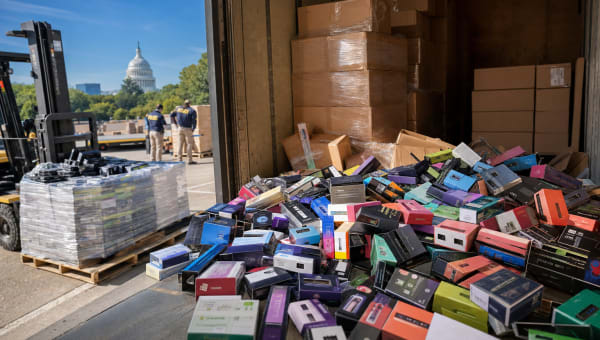
On July 9, 2026, the European Anti-Fraud Office (OLAF) confirmed it had coordinated an operation that dismantled two Spain-based international organisations manufacturing and trafficking counterfeit cigarettes, seizing more than 20 million cigarettes and 38.4 tonnes of tobacco leaf and cut tobacco valued at over EUR 10 million. OLAF and Europol jointly led coordination, with Spain's Guardia Civil, Poland's Central Bureau of Investigation, Portugal's National Republican Guard and Lithuania's Customs Criminal Service taking part, and 50 people were arrested across 23 searches in Spain.
For legitimate tobacco manufacturers, distributors and logistics operators, the operation is a signal that intelligence-led, cross-border enforcement of the illicit-trade regime is intensifying. OLAF supplied operational intelligence on the movement of tobacco precursors, machinery and vehicles to national authorities, and that intelligence identified additional targets previously unknown to the investigation.
What did the OLAF-led operation dismantle, and what was seized?
The operation, carried out in June 2026 and disclosed on July 9, 2026, targeted two international organisations based in Spain that manufactured, distributed and trafficked counterfeit tobacco products. Officers seized 20 million cigarettes, 38.4 tonnes of tobacco leaf and cut tobacco, manufacturing equipment, encrypted electronic devices, 18 vehicles, EUR 170,000 in cash and several firearms, with a preliminary estimated value exceeding EUR 10 million.
Searches took place at homes, commercial premises and industrial warehouses across the Spanish provinces of Alicante, Cuenca, Huelva, Murcia, Seville and Toledo, according to the Guardia Civil press release. Two of the 50 people arrested have since been handed over to the Polish authorities, and OLAF states that investigations remain ongoing and further operational action cannot be ruled out.
| Item seized | Quantity or value |
|---|---|
| Counterfeit cigarettes | 20 million sticks |
| Tobacco leaf and cut tobacco | 38.4 tonnes |
| Estimated total value | Over EUR 10 million |
| Cash confiscated | EUR 170,000 |
| Vehicles confiscated | 18 |
| People arrested | 50 (2 handed to Poland) |
| Searches executed | 23 across 6 Spanish provinces |
Which agencies coordinated, and what does the enforcement model signal?
OLAF and Europol carried out coordination among the participating authorities, with OLAF providing operational intelligence on the movement of tobacco precursors, machinery, vehicles and other materials destined for the illicit cigarette factory. That intelligence guided national investigations, enabled authorities to monitor illicit logistical activity, and surfaced additional targets not previously known to investigators.
The model matters for compliance teams because it shows enforcement built on supply-chain visibility, tracking precursors, manufacturing equipment and logistics rather than relying on point-of-sale checks. It operationalises the cooperation and information-sharing obligations of the WHO FCTC Protocol to Eliminate Illicit Trade in Tobacco Products and the EU track-and-trace regime under the Tobacco Products Directive (Directive 2014/40/EU), without changing either instrument.
Who in the legitimate tobacco supply chain should take note?
The audience most exposed is tobacco supply-chain compliance and customs or illicit-trade leads at EU manufacturers, distributors and logistics operators. The operation underlines that authorities are tracing tobacco precursors and manufacturing machinery upstream, which means any legitimate operator whose precursors, equipment or transport could be diverted into an illicit factory is part of the enforcement perimeter.
Operators in Spain, Poland, Portugal and Lithuania were directly in scope of this operation, but the intelligence-led, cross-border model applies EU-wide. Legitimate businesses are not the target of the seizure, yet they face heightened scrutiny of their know-your-customer, due-diligence and record-keeping practices as authorities map licit and illicit flows against each other.
What compliance steps reduce illicit-trade exposure?
Practical steps flow directly from how OLAF built its intelligence picture. Tighten know-your-customer and due-diligence checks on buyers of tobacco leaf, cut tobacco, precursors and manufacturing equipment, and verify that counterparties hold the licences the FCTC Illicit Trade Protocol and national transpositions require. Reconcile track-and-trace data under EU Implementing Regulation (EU) 2018/574 against physical movements, and investigate gaps before authorities do.
Record the chain of custody for machinery, vehicles and logistics services so that diversion can be detected and documented, and brief procurement, logistics and customs teams on the precursor-tracking focus this operation demonstrates. Continuous, per-jurisdiction monitoring surfaces enforcement actions like this the moment they publish, giving compliance teams time to refresh due diligence before the next coordinated bust.
Follow this topic in real time with a free monitoring job
Next steps for affected teams: confirm whether your supply chain touches the provinces or counterparties in scope, verify that track-and-trace and know-your-customer records are audit-ready, and brief the relevant teams on the precursor-tracking enforcement model. Obsidian follows these enforcement developments across jurisdictions so compliance leads can act on the signal, not just the headline.