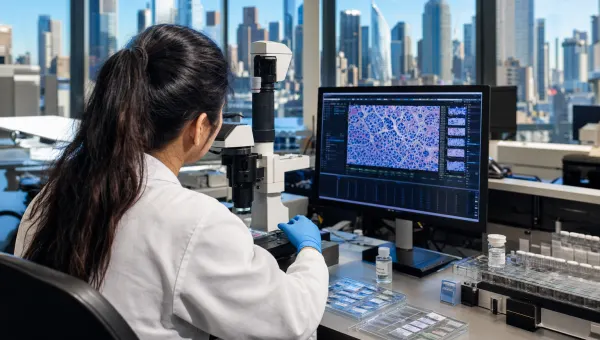
Qatar's General Tax Authority announced on September 7, 2026 that, from November 1, 2026, analysis certificates required to register sweetened drinks will be approved electronically through the Dhareeba platform. The change is a direct integration with laboratories accredited by the Ministry of Public Health and registered with the Authority: taxpayers will no longer attach certificates by hand.
The taxpayer still files the product-registration application on Dhareeba and still delivers the sample to an accredited laboratory. What changes is the last mile: once the laboratory approves the results, the test data and the analysis certificate are sent automatically to Dhareeba. The tests determine the types and quantities of sugars and sweeteners, which is the classification input for Qatar's sugar-content excise on sweetened drinks, introduced by Law No. (2) of 2026 amending Law No. (25) of 2018 Concerning Excise Tax.
What changes for product registration on November 1, 2026?
From November 1, 2026, a sweetened-drink product registration on Dhareeba is complete only when the accredited laboratory has transmitted the analysis certificate electronically. Manual attachment of a paper or PDF certificate is no longer the path.
The GTA's stated purpose is to cut manual procedures, raise data accuracy, and bind the laboratory result to the registration file at the moment the lab approves it. If the laboratory is not Ministry of Public Health-accredited and GTA-registered, or cannot send the result into Dhareeba, the registration stalls even if a paper certificate exists. The integration coincides with the expansion of the excise on sweetened drinks under Law No. (2) of 2026 (Official Gazette April 7, 2026, in force July 6, 2026). November 1 does not rewrite those rates; it is the channel that feeds sugar and sweetener quantities into the already-live classification.
Who has to change their workflow, and by when?
Every taxpayer that registers sweetened drinks for sale in Qatar must be on the new path by November 1, 2026: domestic producers, importers, and distributors that file product registrations on Dhareeba. The exposed set includes Gulf and international beverage groups selling into Qatar and Qatari manufacturers of sweetened drinks.
Laboratories sit in the perimeter: only those accredited by the Ministry of Public Health and registered with the GTA can feed certificates into Dhareeba. Confirm before November 1, 2026 that the chosen lab is on both lists and can complete a live transmission, not merely issue a paper report.
How does the new lab-to-Dhareeba path work?
The GTA sequence is three steps. First, the taxpayer submits the product-registration application on Dhareeba. Second, the taxpayer delivers the sample to an accredited, GTA-registered laboratory, which tests types and quantities of sugars and sweeteners. Third, once the laboratory approves the results, the test data and the analysis certificate are sent automatically to Dhareeba. After November 1, 2026 there is no parallel step in which the taxpayer uploads the certificate.
| Step | Until October 31, 2026 | From November 1, 2026 |
|---|---|---|
| File the product registration | Submit the application on Dhareeba | Unchanged: submit on Dhareeba |
| Sample and laboratory test | Deliver the sample to an accredited lab | Unchanged: accredited, GTA-registered lab only |
| Analysis certificate | Taxpayer attaches the certificate to the file | Lab transmits test data and certificate into Dhareeba automatically |
| Registration complete | Once the attachment is accepted | Once the electronic certificate is received on the platform |
What should tax and product-registration teams do before November 1?
Map every sweetened-drink SKU that still needs a Dhareeba registration or a refreshed analysis certificate, and put each SKU on a named accredited laboratory with a sample slot that leaves time for a failed transmission before November 1, 2026. Run one end-to-end test so the automatic certificate actually lands on the Dhareeba file, brief customs and commercial teams that a registration without the electronic certificate will not move, and assign a single owner for the November 1 cutover.
Obsidian's continuous, per-jurisdiction monitoring surfaces General Tax Authority procedure changes like this the moment they publish.
Verify which of your SKUs still need a Dhareeba registration or a new lab certificate, confirm your laboratory can transmit into Dhareeba before November 1, 2026, and brief the tax, product-registration and customs owners now: after that date, a paper certificate in the file is not the registration.