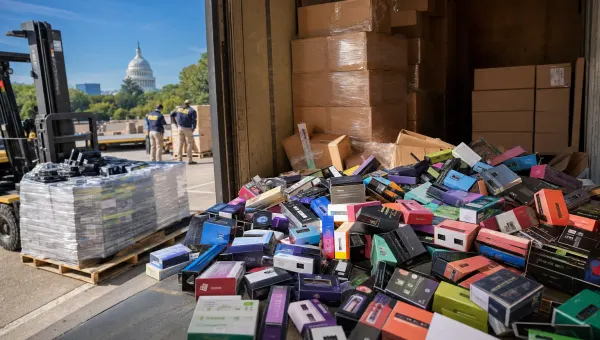
Cameroon has acceded to the WHO Protocol to Eliminate Illicit Trade in Tobacco Products, depositing its instrument of accession on July 21, 2026. The Protocol, the first supplementary treaty under the WHO Framework Convention on Tobacco Control (FCTC), enters into force for Cameroon on October 19, 2026, ninety days after the deposit, in accordance with Article 45. From that date, tobacco manufacturers, importers and distributors operating in Cameroon become bound by its tracking, tracing and licensing obligations. The UN Treaty Collection page for the Protocol records the deposit and the treaty's participation status.
That page lists 73 Parties and 54 signatories as of July 21, 2026 and does not yet show Cameroon among the Parties. This reflects the known publication lag between a depositary notification and the update of the participants table, not a contradiction of the deposit. The release-check that confirmed this milestone was stamped on July 21, 2026.
What does accession change for operators in Cameroon?
Cameroon was already a Party to the parent WHO FCTC, which is a prerequisite for acceding to the Protocol under its Article 43. Accession adds a binding enforcement layer that the FCTC alone does not provide: concrete supply chain controls aimed at suppressing the illicit tobacco trade. The Protocol was adopted in Seoul on November 12, 2012 at the fifth session of the Conference of the Parties to the WHO FCTC and entered into force globally on September 25, 2018, ninety days after the fortieth instrument was deposited; its certified true copy sets out the full text of the obligations.
Until now, Cameroonian operators faced no treaty-level duty to track and trace products or to license every link in the chain. From October 19, 2026 those obligations attach directly to the tobacco supply chain operating in Cameroon, and Cameroon must put in place the domestic legislation, infrastructure and penalties to enforce them.
Which supply chain obligations apply, and to whom?
The Protocol imposes duties that fall on tobacco product manufacturers, importers, exporters and, in practice, the distributors and customs intermediaries that handle their goods. For the Cameroonian market, the operators most exposed are manufacturers and importers active in the country, including British American Tobacco Cameroon (BAT Cameroon), together with their logistics and customs partners. The core obligations are:
- Licensing (Article 6): the manufacture, import and export of tobacco products require a licence from the competent authority; unlicensed activity becomes unlawful.
- Due diligence (Article 7): operators must verify the identity and legitimacy of customers and suppliers, including enhanced due diligence on new or higher-risk business relationships.
- Tracking and tracing (Articles 8 to 13): a national tracking and tracing system with unique identification markings on every unit pack, allowing the authorities to follow a product from manufacture through the supply chain to the point of sale.
- Record-keeping and reporting: complete records of transactions and movements must be kept and made available to the competent authority.
- Internet sales, duty-free and transit: tighter controls on sales by internet, duty-free sales and products in transit or passing through free trade zones.
A tracking and tracing regime is the most operationally demanding item. It requires unique, machine-readable markings on packaging, a data storage arrangement accessible to the authorities, and controls on the recording equipment that applies the markings. Cameroon will need to designate a competent authority and stand up, or contract, the underlying infrastructure before the obligations can be enforced in practice.
When does it enter into force, and what is the timeline?
For each Party that joins after the Protocol's global entry into force, Article 45.2 fixes entry into force on the ninetieth day following the deposit of its own instrument. Cameroon deposited on July 21, 2026, so the Protocol becomes binding on Cameroon on October 19, 2026.
| Milestone | Date | What it means for operators |
|---|---|---|
| Instrument deposited | July 21, 2026 | Cameroon becomes a future Party; the countdown starts |
| Entry into force for Cameroon | October 19, 2026 | Treaty obligations become binding on Cameroon |
| Domestic implementation | To be set by Cameroonian law | Licensing, tracking and tracing and penalties become enforceable nationally |
Entry into force at the treaty level is not the same as immediate enforceability on the ground. Cameroon still has to translate the Protocol into national law and operationalise the tracking and tracing infrastructure. Operators should expect a domestic implementation window, but the treaty clock starts on October 19, 2026.
Continuous, per-jurisdiction real-time monitoring surfaces this kind of change the moment a depositary notification publishes.
Compliance and regulatory affairs leads for tobacco operators in Cameroon should confirm whether their products and supply chain activities fall within the Protocol's scope, map current licensing, due diligence and record-keeping practices against Articles 6, 7 and 8 to 13, engage early with the Cameroonian competent authority on the tracking and tracing timeline, and brief procurement, logistics and customs teams on the forthcoming licensing and marking requirements. Obsidian tracks this development as the implementing texts land.