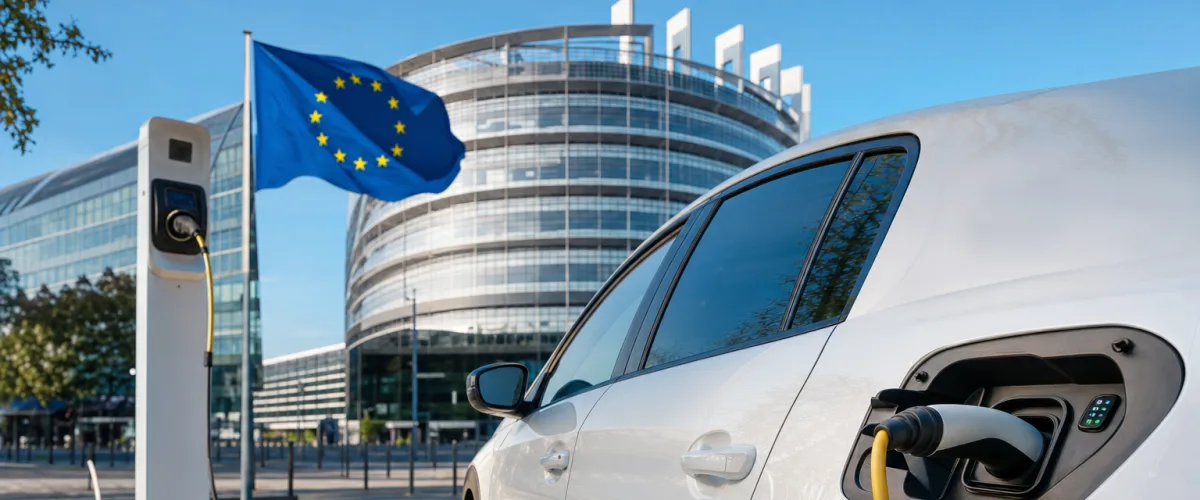
On August 20, 2026, the European Commission adopted COM(2026)565, a Proposal for a Regulation that rewrites the EU's energy-efficient product legislation through a targeted Omnibus simplification. The text, published on the Commission's Better Regulation portal, opens an eight-week public feedback window running to October 15, 2026 before it enters the ordinary legislative procedure in Parliament and Council. It amends the rules that manufacturers of energy-related products, from domestic heating and cooking appliances to tyres and automobiles, use every day to register products, deliver labels, and prove compliance.
The proposal builds on an Implementation Dialogue, a "reality check" exercise, two implementation reports, and a full impact assessment (SWD(2026)565, with a summary in SWD(2026)566 and a supporting opinion in SEC(2026)565). It follows a call for evidence that closed March 12, 2026 after 58 submissions from named trade bodies, including ACEA for automobile makers, CEFACD for domestic heating and cooking appliances, and Eurofuel for liquid heating fuels.
What does the proposal change for energy and tyre labels?
The Commission targets four specific pain points rather than rewriting the framework from scratch. It simplifies the rules for delivering and displaying energy and tyre labels, the on-product and online labels that show consumers an efficiency class. It streamlines registration in the EPREL database, the European Product Database for Energy Labelling where suppliers must register every regulated product before placing it on the EU market. It strengthens market surveillance and compliance enforcement across the framework. And it opens the door to amending the tyre label itself, including through delegated acts, which could change the information tyre makers must show on fuel efficiency, wet grip, and noise.
For manufacturers, the EPREL and label-display changes are the most immediately operational: they touch product-registration workflows, the IT systems that push product data to EPREL, and the way labels appear in e-commerce listings.
Who has to act, and by when?
The proposal binds the same population the existing ecodesign and energy labelling framework already covers: suppliers, typically manufacturers or importers, of energy-related products placed on the EU market, plus tyre suppliers and automobile makers tracking tyre-label obligations. The 58 feedback submissions confirm the engaged audience spans heating and cooking appliance makers, liquid heating fuel suppliers, and vehicle manufacturers.
No compliance date applies yet. COM(2026)565 is a Commission proposal, not an adopted regulation: it must pass through Parliament first reading, a Council position, and trilogue negotiations before a final joint text is adopted, signed by the Presidents of the European Parliament and the Council, and published in the Official Journal. The realistic horizon for application is 2027 at the earliest. The only hard date now is October 15, 2026, the feedback deadline, after which the Commission summarises all input for Parliament and Council.
How does this fit with ESPR and the wider ecodesign architecture?
The proposal amends the standing energy-efficient product legislation, a track distinct from but adjacent to the Ecodesign for Sustainable Products Regulation (ESPR, Regulation (EU) 2024/1781), which replaced Ecodesign Directive 2009/125/EC from July 2024 and broadened product requirements. Where ESPR sets ecodesign requirements and the Digital Product Passport, this Omnibus targets the parallel energy labelling and EPREL registration layer that sits alongside it. Compliance leads should track the two as separate workstreams, not conflate them.
What is the timeline from adoption to application?
| Stage | Date | Status |
|---|---|---|
| Call for evidence (impact assessment) | February 12 to March 12, 2026 | Closed, 58 feedback items |
| Commission adoption of COM(2026)565 | August 20, 2026 | Adopted, feedback open |
| Public feedback closes | October 15, 2026 | Eight-week window |
| Parliament and Council ordinary procedure | Late 2026 onward | Pending |
| Application | 2027 earliest, post-OJ publication | Subject to co-legislators |
Continuous, per-jurisdiction real-time monitoring surfaces a proposal like this the day the Commission adopts it, not when the trade press catches up.
Verify whether your products are EPREL-registered and in scope, brief your regulatory and IT teams on the label-display and registration changes, and submit feedback before October 15 if the simplification helps or hurts your product family.