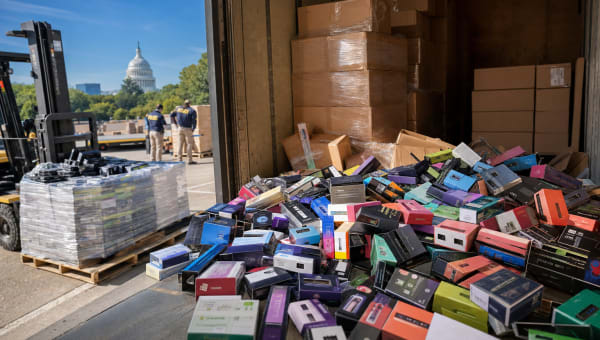
Australia's Therapeutic Goods Administration (TGA) closed every remaining legal pathway for nicotine pouches on July 24, 2026, when new regulations took effect banning imports under the Personal Importation Scheme, access through the Special Access Scheme and Authorised Prescriber Scheme, and compounding by pharmacists. The TGA published the changes on July 17, 2026, giving affected importers, retailers, pharmacies and prescribing practitioners one week before the restrictions became binding.
Professor Anthony Lawler, Deputy Secretary of the Department of Health, Disability and Ageing and Head of the TGA, said the changes "respond to growing public health concern about nicotine pouches and their increasing availability in the Australian market" and strengthen the TGA's ability to combat unlawful importation, advertising and supply. Nicotine pouches were already illegal in Australia unless prescribed, and the new rules remove the access routes that had allowed them to enter under therapeutic-goods exceptions.
What changed on July 24, 2026?
Four therapeutic-goods pathways that previously allowed nicotine pouches into Australian hands are now closed. The Personal Importation Scheme let individuals legally import therapeutic goods for personal use under certain conditions; nicotine pouches can no longer be imported for personal use through it. The Special Access Scheme and Authorised Prescriber Scheme let health practitioners prescribe or supply unapproved therapeutic goods when clinically justified; neither can now be used for nicotine pouches. Pharmacists and certain other practitioners may compound medicines for individual patients when an approved medicine is not suitable, but nicotine pouches can no longer be compounded for individual patient use.
| Access pathway | Status before | Status from July 24, 2026 |
|---|---|---|
| Personal Importation Scheme | Individuals could import therapeutic goods for personal use under conditions | Nicotine pouches can no longer be imported for personal use |
| Special Access Scheme | Practitioners could prescribe unapproved goods when clinically justified | Nicotine pouches can no longer be accessed |
| Authorised Prescriber Scheme | Authorised prescribers could supply unapproved goods to patients | Nicotine pouches can no longer be accessed |
| Pharmacy compounding | Pharmacists could compound medicines for individual patients | Nicotine pouches cannot be compounded for individual patient use |
The TGA confirmed the changes follow targeted consultation with stakeholders and reflect concerns about the health risks of emerging nicotine products, particularly their potential appeal to young people and the increased risk of nicotine dependence.
Who is affected, and what must they do now?
Importers and online retailers are the most exposed. Any business still moving nicotine pouches into Australia, advertising them, or supplying them without an approved, ARTG-listed product is now outside the law. Since August 7, 2025, nicotine pouches have been illegal in Australia unless prescribed, but the four pathways closed on July 24, 2026 removed the importation and prescribing mechanisms that some operators had relied on. Compliance teams should treat the new rules as a hard stop, not a transition.
Pharmacies and compounding pharmacists must stop preparing nicotine pouches for individual patients. Prescribing practitioners can no longer use the Special Access Scheme or Authorised Prescriber Scheme to authorise them. Patients who were obtaining pouches through these routes should be redirected to approved, evidence-based options: nicotine replacement therapies such as patches, gum and lozenges, and other clinically appropriate medicines. Logistics and delivery service providers should note the TGA has previously warned online delivery services not to breach Australian laws on the supply and advertising of nicotine and vaping goods, and that enforcement extends to the supply chain, not only the seller.
How does this fit Australia's existing nicotine rules?
The new restrictions sit inside the Therapeutic Goods Act 1989 framework, which the TGA administers, alongside the Public Health (Tobacco and Other Products) Act 2023. They do not change the prescription-only status of nicotine vaping products, which has applied since October 1, 2021. They target nicotine pouches specifically because, the TGA states, there is limited evidence they help people quit smoking, their full health impacts remain unknown, and they may carry high or inconsistent nicotine content, potential contaminants and misleading labelling.
What should compliance teams do next?
- Confirm no nicotine pouch stock is being imported, advertised or supplied through the four closed pathways.
- Update internal supply-chain and procurement controls to block inbound shipments of nicotine pouches.
- Brief pharmacy, dispensing and medical staff that compounding, Special Access and Authorised Prescriber routes for nicotine pouches are closed.
- Redirect patient queries to approved nicotine replacement therapies, Quitline on 13 7848 (13 QUIT), quit.org.au or the MyQuitBuddy app.
- Report any unlawful sale or supply of nicotine pouches to the TGA.
Continuous, per-jurisdiction real-time monitoring surfaces this kind of change the moment a regulator publishes it, so compliance teams can adjust supply chains before enforcement begins rather than after.
Follow this topic in real time with a free monitoring job
With the four access pathways closed and the TGA actively pursuing unlawful importation, advertising and supply, the legal route for nicotine pouches in Australia is effectively shut. Compliance teams should verify their supply chains now, brief affected staff, and ensure patient communications point to approved cessation options rather than the removed schemes.