On October 19, 2026, Indonesia's food and drug authority, BPOM (Badan Pengawas Obat dan Makanan), published press release HM.01.1.10.26.300 (Siaran Pers Nomor HM.01.1.10.26.300) stating that on October 8, 2026 the Surabaya regional office secured an unlicensed cosmetics production site on Jalan PB Sudirman, Mojokerto, East Java. Indonesian cosmetics manufacturers and notification holders placing creams, lotions and toners on the Indonesian market, Indonesian beauty clinics that buy unlabelled or unnotified skin-lightening, acne and anti-ageing creams, importers and distributors of cosmetics into Indonesia, and Indonesian contract manufacturers of cosmetic creams, lotions and toners must immediately confirm a cosmetics business licence (perizinan berusaha) at every production site, a BPOM notification (izin edar) on each cream, lotion and toner on the Indonesian market, and that formulas contain none of the drug substances named in the seizure, or producing or circulating cosmetics that fail those conditions can be prosecuted under Article 435 in conjunction with Article 138(2) of Law 17/2023 on Health (Undang-Undang Nomor 17 Tahun 2023 tentang Kesehatan), with imprisonment of up to 12 years or a fine of up to Rp5 billion, plus destruction of the goods.
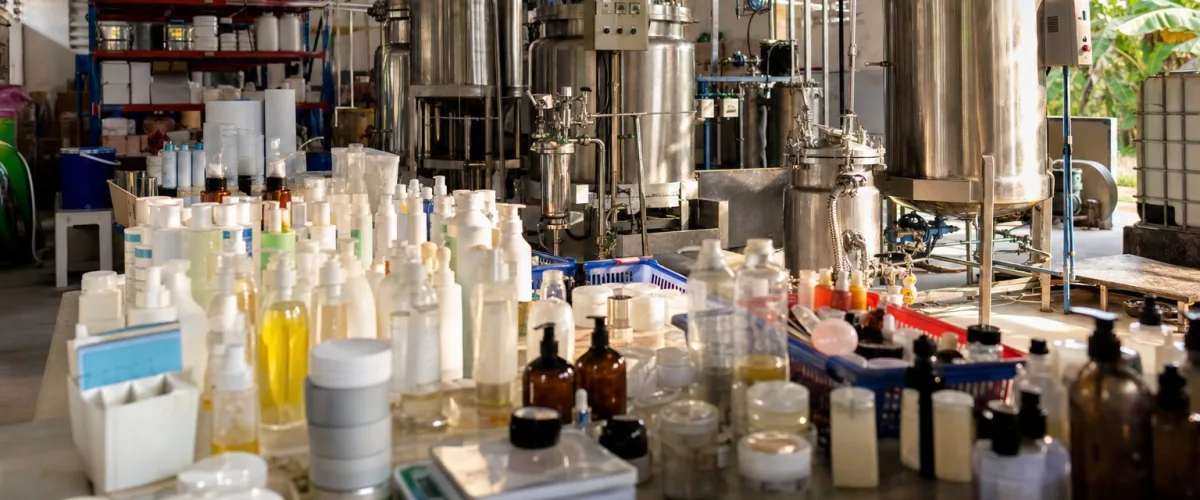
The site held mixing, filling and coding machines, raw materials, bulk and packaging, and it had no cosmetics business licence. Finished creams, lotions and toners were unlabelled and had no marketing authorization. BPOM states the goods are worth more than Rp16 billion, that the site had operated since 2021, and that sales to beauty clinics ran at Rp750 million a month, which the release states as Rp9 billion a year. Laboratory samples of finished and bulk product confirmed retinoic acid, dexamethasone, hydroquinone and mometasone furoate. Stored drug raw materials also included clindamycin phosphate, triamcinolone acetonide, metronidazole and betamethasone dipropionate. The operator is not named. As of the October 19, 2026 release, the case remains under development. The press release is the official account.
What did BPOM seize at the Mojokerto site?
Officers secured the whole stock after intelligence work on illegal cosmetics circulating in Indonesia. Head of BPOM Taruna Ikrar said the operator produced without a cosmetics business licence and added prohibited substances, so safety and quality were not assured. No batch numbers or brand names are given.
| Substance | What the release records | Risk BPOM names |
|---|---|---|
| Retinoic acid (asam retinoat) | Confirmed in laboratory samples of finished and bulk product | Dry skin, burning, teratogenic harm in pregnancy |
| Dexamethasone (deksametason) | Stored raw material and confirmed in laboratory samples | Contact dermatitis, acne, redness, reduced hormone production |
| Hydroquinone (hidrokinon) | Confirmed in laboratory samples | Skin darkening, colour change of the cornea and nails |
| Mometasone furoate (mometason furoat) | Stored raw material and confirmed in laboratory samples | Skin atrophy, disruption of hormone release |
| Clindamycin phosphate | Stored as a drug raw material | Not stated in the release |
| Triamcinolone acetonide | Stored as a drug raw material | Not stated in the release |
| Metronidazole | Stored as a drug raw material | Not stated in the release |
| Betamethasone dipropionate | Stored as a drug raw material | Not stated in the release |
Who is exposed beyond the unnamed Mojokerto site?
The exposed actors are the manufacturers and notification holders, beauty clinics, importers, distributors and contract manufacturers named above. BPOM has not named the operator, and the investigation is still being developed. A clinic that bought plain-pack creams, or a contract filler of cream, lotion or toner, is in scope even if it did not run the Mojokerto site.
What must those operators confirm immediately?
They must immediately match the three conditions the release treats as the breach: a cosmetics business licence for the production site, a BPOM marketing authorization on every cream, lotion and toner circulated, and a formula free of the eight drug substances. Checks that follow from those conditions:
- Match each production site, including contract fillers, to a cosmetics business licence (perizinan berusaha).
- Match each cream, lotion and toner on the Indonesian market to a BPOM notification (izin edar), and stop any plain or unlabelled pack.
- Screen formulas, raw-material stores and retain samples for retinoic acid, dexamethasone, hydroquinone, mometasone furoate, clindamycin phosphate, triamcinolone acetonide, metronidazole and betamethasone dipropionate.
- Ask clinic customers and distributors to quarantine unlabelled or unnotified creams, lotions and toners from any site that cannot show the licence and the notification.
- Keep purchase and batch records of where those products went: the release says distribution already reached clinics across Indonesia.
The release sets no separate compliance date for other operators. Continuous per-jurisdiction monitoring surfaces a seizure of this kind the moment BPOM publishes it.
What does Article 435 provide if the conditions fail?
BPOM states that producing or circulating illegal cosmetics, or cosmetics that do not meet the requirements (tidak memenuhi ketentuan, TMK), can be charged under Article 435 in conjunction with Article 138(2) of Law 17/2023. The stated penalty is imprisonment of up to 12 years or a fine of up to Rp5 billion. On this site, BPOM has secured the goods, taken samples, and said administrative sanctions can include destruction. No fine against a named company, and no appeal window, appears in the release.
Verify the three conditions for your sites and SKUs, screen the eight substances, and brief production, quality and the teams that buy or sell creams, lotions and toners into Indonesia. Obsidian tracks the BPOM releases that change that picture.