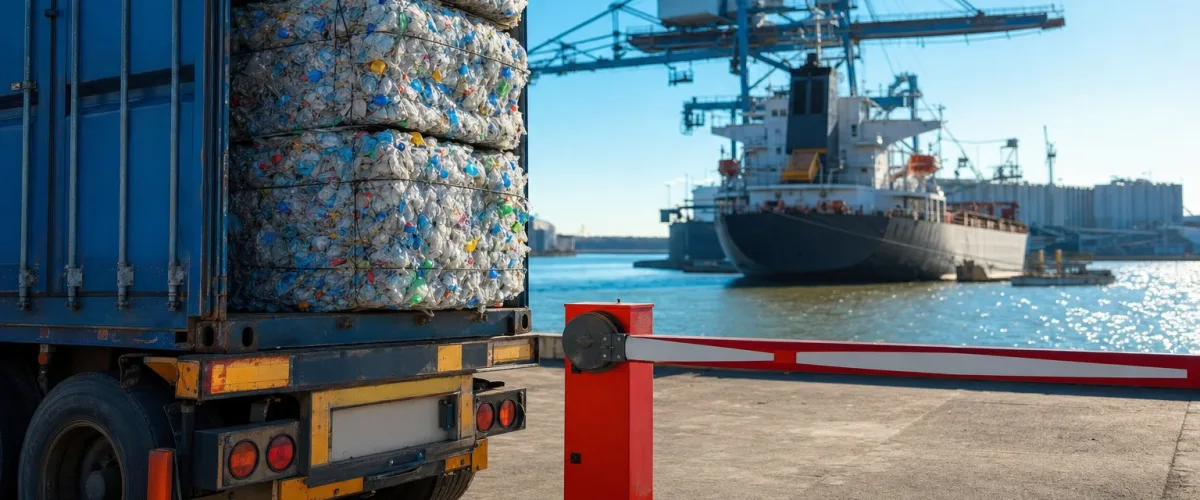
On 20 November 2026, the European Commission's Directorate-General for Environment stated that, from 21 November 2026, exports of plastic waste from the European Union to non-OECD countries are prohibited under Regulation (EU) 2024/1157. EU exporters of plastic waste to Malaysia, Indonesia and Vietnam, EU waste brokers and dealers arranging plastic-waste shipments to non-OECD countries, EU plastic recyclers and collectors that sold surplus plastic waste outside the OECD, and EU notifiers of plastic waste shipments under the prior informed consent procedure must stop every shipment of plastic waste from the EU to non-OECD countries by November 21, 2026, and reroute or treat that waste in the EU or in OECD destinations that still accept it, or a shipment on or after that date is prohibited under Regulation (EU) 2024/1157 and can be stopped, returned or sanctioned.
The prohibition covers plastic waste as a category and applies until at least 21 May 2029. After that date a non-OECD country may apply to receive plastic waste from the EU. Exports to OECD countries remain possible, subject to Commission scrutiny of whether the destination can manage the waste in an environmentally sound manner. The Commission notice of 20 November 2026 states the start date.
What does Regulation (EU) 2024/1157 prohibit from 21 November 2026?
Regulation (EU) 2024/1157 is the EU Waste Shipment Regulation, in force since 20 May 2024, which sets stricter rules so EU waste exports are managed without shifting the environmental burden to non-EU countries. From 21 November 2026 it prohibits EU exports of plastic waste to non-OECD countries. The text of Regulation (EU) 2024/1157 is the legal basis. A wider rule follows: as a general principle the EU will no longer export waste to non-OECD countries from 21 May 2027, except certain non-hazardous wastes where the country asks to keep receiving them and shows it can manage them sustainably.
Who must stop shipments to Malaysia, Indonesia and Vietnam?
The actors who must change a booking are those who placed EU plastic waste on a non-OECD route: exporters, brokers and dealers, recyclers and collectors selling surplus outside the OECD, and notifiers under the prior informed consent procedure. The Commission's 2025 destination figures show why Malaysia, Indonesia and Vietnam sit at the front of that list.
| 2025 destination | Volume | Position from 21 November 2026 |
|---|---|---|
| Türkiye | 510,000 tonnes | OECD: exports remain possible, under scrutiny |
| Malaysia | 276,000 tonnes | Non-OECD: plastic waste prohibited |
| Indonesia | 215,000 tonnes | Non-OECD: plastic waste prohibited |
| Vietnam | 137,000 tonnes | Non-OECD: plastic waste prohibited |
| United Kingdom | 108,000 tonnes | OECD: exports remain possible, under scrutiny |
In 2025 about half of EU plastic waste exports went to OECD countries and half to non-OECD countries. The Commission puts annual EU plastic waste generation at around 40 million tonnes and annual exports between 1 and 1.5 million tonnes. A contract that still names a Malaysian, Indonesian or Vietnamese discharge port for plastic waste is the contract that has to move. Obsidian tracks 36 regulatory texts (in force, amended or in preparation) for the ESG & Sustainability industry in the European Union, as of November 2026.
Which routes stay open after 21 November 2026?
OECD destinations stay open. The Commission is monitoring those exports and will assess whether countries that receive significant volumes can manage the waste in an environmentally sound manner, as the regulation requires. On 18 September 2026 it published its assessment of plastic waste exports from the EU to Türkiye, the largest 2025 destination at 510,000 tonnes. The United Kingdom, at 108,000 tonnes in 2025, is in the same OECD column.
The plastic-waste ban runs until at least 21 May 2029, and only then may a non-OECD country apply to receive such waste. From 21 May 2027 the general rule is no EU waste exports to non-OECD countries, with the same exception for certain non-hazardous wastes. The first list of countries authorised to receive waste from the EU is to be set by the end of 2026 and updated at least every two years. Countries or waste types left off that list may apply again.
What happens if a shipment leaves on or after 21 November 2026?
A plastic-waste shipment from the EU to a non-OECD country on or after 21 November 2026 is prohibited under Regulation (EU) 2024/1157 and can be stopped, returned or sanctioned. The Commission notice does not set a new fine figure for this start date. The operative risk it names is the prohibition: the load does not clear, and the notifier carries the return. Bookings and notifications that still show a non-OECD consignee for plastic waste have to be cancelled or rewritten onto an EU treatment route or an OECD destination that still accepts the grade.
Confirm that no open plastic-waste lot is consigned to a non-OECD country, that any OECD outlet still named is one the buyer will take, and that the prior informed consent file matches the new route. Continuous per-jurisdiction monitoring surfaces a start date of this kind the day the Commission publishes it.
Next, pull every plastic-waste file with a non-OECD discharge, stop anything dated on or after 21 November 2026, rebook treatment in the EU or an OECD destination that still accepts the material, and brief brokers, recyclers and the notifier on the 21 May 2027 rule and the country list due by the end of 2026.