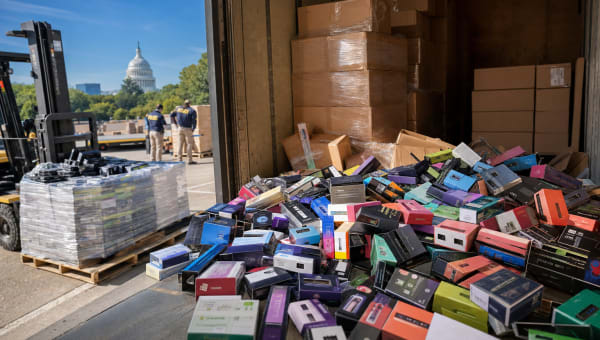
On October 1, 2026, the Therapeutic Goods (Poisons Standard, October 2026) Instrument 2026 (F2026L01327) commences in Australia and creates a new Schedule 9 entry for 6-methylnicotine (CAS 13270-56-9). The instrument, made under the Therapeutic Goods Act 1989 and administered by the Therapeutic Goods Administration (TGA), repeals the June 2026 Poisons Standard. The delegate's final decision, published on the TGA website on September 25, 2026, confirmed the interim decision and the new Schedule 9 entry.
Australian e-liquid and vape manufacturers using 6-methylnicotine, Australian importers of e-liquids and vape products containing 6-methylnicotine, Australian online retailers selling 'nicotine-free' vape liquids and pouches, and suppliers of oral nicotine pouches containing 6-methylnicotine in Australia must cease manufacturing, importing and supplying e-liquids and oral pouches containing 6-methylnicotine, and reformulate or withdraw affected products, by October 1, 2026, or unlawful supply and possession of 6-methylnicotine becomes a criminal offence under Commonwealth and state and territory drug laws, with higher penalties for unlawful supply and possession. The explanatory statement states that the Schedule 9 entry prohibits all preparation, manufacture, possession, sale and use of 6-methylnicotine because of its high risk of dependency, abuse, misuse or illicit use. State and territory poisons laws incorporate the Schedules by reference, so the prohibition is not limited to therapeutic goods on the ARTG.
What changed in the October 2026 Poisons Standard?
6-methylnicotine is included in the Poisons Standard for the first time, in Schedule 9, alongside other new entries the instrument lists (11 new chemical entities in Schedule 4, two in Schedule 5 and three in Schedule 6). The explanatory statement records the consultation path: proposed amendments covering 6-methylnicotine were referred to the June 2025 meetings of the Advisory Committee on Medicines Scheduling and the joint medicines and chemicals committees, public comment ran from May 14, 2025 to June 13, 2025, and comment on the interim decision ran from June 9, 2026 to July 10, 2026.
| Point | Before October 1, 2026 | From October 1, 2026 |
|---|---|---|
| Instrument | Therapeutic Goods (Poisons Standard, June 2026) Instrument 2026, in effect since June 1, 2026 | F2026L01327 repeals and replaces it |
| 6-methylnicotine | Not a Schedule 9 entry | New Schedule 9 entry: preparation, manufacture, possession, sale and use prohibited |
| Decision | Interim decision open for comment until July 10, 2026 | Final decision published September 25, 2026; instrument commences October 1, 2026 |
Who is exposed, and which products are in scope?
The exposed actors are manufacturers, importers and suppliers who put 6-methylnicotine into e-liquids, vape products or oral nicotine pouches for the Australian market, including online retailers whose liquids and pouches are sold as nicotine-free. The expected milestone this edition implements describes the analogue as the substance used to keep those products outside a nicotine-only control. The instrument does not publish a concentration threshold: the explanatory statement covers all preparation, manufacture, possession, sale and use.
Advertising of Schedule 9 substances to consumers is prohibited under the Therapeutic Goods Act 1989, which the explanatory statement restates for Schedule 9 and Schedule 10. A listing that still describes a 6-methylnicotine product as nicotine-free is a supply and advertising problem, not only a formulation problem.
What must be done by October 1, 2026?
Stop manufacture, import, sale and supply of any e-liquid, vape or oral pouch that contains 6-methylnicotine, and withdraw or reformulate stock that still contains it, before the instrument commences. Practical checks that follow from the Schedule 9 entry:
- Screen bills of materials, certificates of analysis and supplier declarations for 6-methylnicotine and CAS 13270-56-9, including products labelled nicotine-free.
- Quarantine Australian warehouse and online listings that still contain the substance, and stop new import shipments.
- Rewrite labels and consumer claims that present a 6-methylnicotine product as lawful or nicotine-free.
- Confirm with state and territory poisons units how possession and supply offences attach once the Schedules are adopted locally. The TGA Poisons Standard page points to those contacts and to F2026L01327 as the current edition.
Continuous, per-jurisdiction monitoring is what surfaces a Poisons Standard edition on the day the Federal Register registers it.
What happens if supply continues after October 1, 2026?
The explanatory statement's reason for Schedule 9 is prohibition of preparation, manufacture, possession, sale and use, on the ground of dependency, abuse, misuse or illicit use. Once states and territories give the new Schedule legal effect through their poisons laws, supply and possession without authority are criminal offences, and supply attracts the higher penalty band. The instrument itself does not set a dollar fine: the penalty figures sit in the adopting state and territory statutes, not in F2026L01327.
Next: confirm whether any SKU contains 6-methylnicotine, stop supply of those SKUs by October 1, 2026, and brief regulatory, quality and e-commerce teams on the Schedule 9 entry and the September 25, 2026 final decision. Obsidian tracks the Poisons Standard editions as they are registered.