On August 13, 2026, China's Ministry of Ecology and Environment (MEE) published a public consultation on three draft China Certified Emission Reduction (CCER) project methodologies covering reforestation carbon sinks, arbor forest management carbon sinks, and medium-deep geothermal hydrothermal heating. Issued by the MEE General Office as document 环办便函〔2026〕265号, the consultation closes on August 25, 2026, leaving stakeholders eleven days to submit written comments.
The three drafts widen the eligible project types under the voluntary greenhouse gas reduction (CCER) scheme that MEE relaunched in January 2024. CCER credits offset up to 5% of verified emissions in the national emissions trading system (ETS), so each new methodology both opens registration to forestry and geothermal project developers and expands the offset supply available to compliance buyers in power, steel, cement and aluminium.
What do the three draft methodologies cover?
The consultation bundles three distinct project types into one comment round. Each methodology fixes the design, monitoring and emission-reduction calculation rules a project must meet to issue CCER credits.
| Draft methodology | Project type | Abatement mechanism |
|---|---|---|
| 更新造林碳汇 (Reforestation carbon sink) | Reforestation and afforestation projects | Biological CO2 removal by newly established forest biomass |
| 乔木林经营碳汇 (Arbor forest management carbon sink) | Management of existing arbor (high-forest) stands | Incremental sequestration through improved forest management |
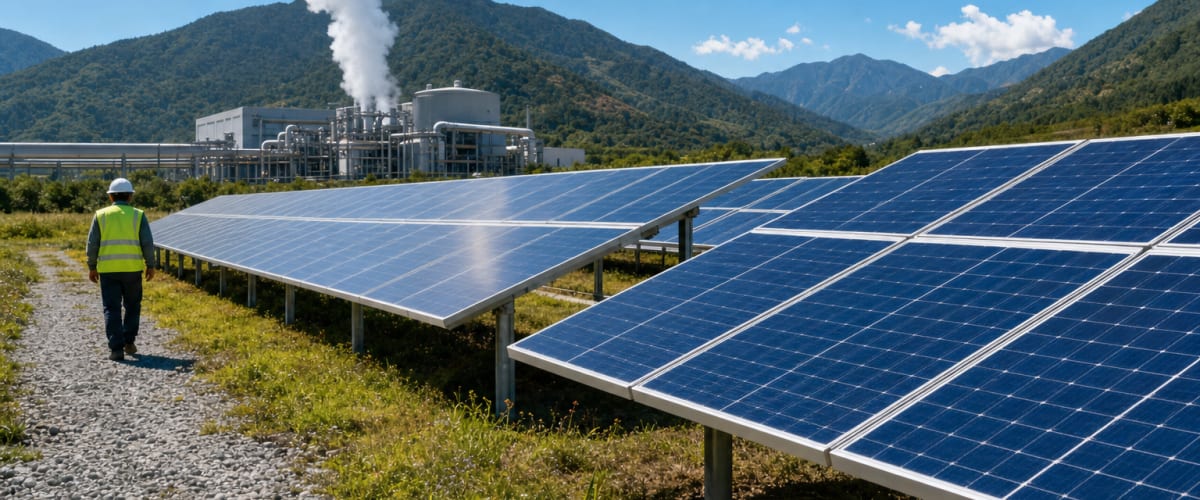
| 中深层地热能水热型供暖 (Medium-deep geothermal hydrothermal heating) | Geothermal heating engineering projects | Fossil-fuel heat substitution using medium-deep geothermal energy |
The two forestry methodologies add nature-based removal pathways to a CCER pipeline that has prioritised renewable energy and methane utilisation since the 2024 relaunch. The geothermal methodology is the first dedicated heating-application pathway, aligning CCER eligibility with China's coal-to-clean-heating transition.
Who must respond, and by when?
Comments are due by August 25, 2026. Any organisation, institution, enterprise or individual may submit written feedback to the MEE Department of Climate Change. Electronic copies should be sent to [email protected], with hard copy to No. 12 East Chang'an Avenue, Dongcheng District, Beijing 100006. The named contacts are Hou Guanyu and Sun Yijia, at (010) 65645679.
Four groups should treat the window as actionable: CCER project developers and carbon-asset managers evaluating new project pipelines; forestry carbon-sink operators planning reforestation or forest-management registration; geothermal-heating project operators; and ETS compliance buyers in power, steel, cement and aluminium whose 5% offset ceiling depends on CCER supply. The drafts set baseline, additionality and monitoring rules, so comments filed now shape project economics across the full crediting period.
How does this fit the CCER offset framework and the 2027 expansion?
The CCER scheme is the voluntary counterpart to China's national ETS, governed by the Measures for the Administration of Voluntary GHG Emission Reduction Trading (Trial) (温室气体自愿减排交易管理办法(试行)). The ETS itself rests on the Interim Regulations on the Administration of Carbon Emissions Trading, the State Council regulation that took effect May 1, 2024. Only CCER credits issued on or after January 22, 2024 are eligible to offset up to 5% of a compliance buyer's verified emissions.
The national ETS expanded on March 26, 2025 from power generation to steel, cement and aluminium smelting, lifting coverage to roughly 60% of national CO2. An August 2025 State Council guideline sets the CCER market to expand to all key fields by 2027, with a credible, transparent and internationally aligned market completed by 2030. The three methodologies in this consultation are a concrete step toward that 2027 expansion: every newly approved project type widens the fields in which CCER credits can be generated. Continuous, per-jurisdiction real-time monitoring surfaces consultations like this the moment they publish on the MEE site.
Next steps: confirm whether your projects fall under any of the three draft methodologies, map the baseline and monitoring requirements against your project documentation, and file written comments before August 25. Forestry and geothermal developers should also review the draft compilation notes (编制说明) issued alongside each methodology, which set out the calculation logic in detail. ETS compliance buyers should track how each approved methodology shifts the CCER supply available against the 5% offset ceiling through 2027.