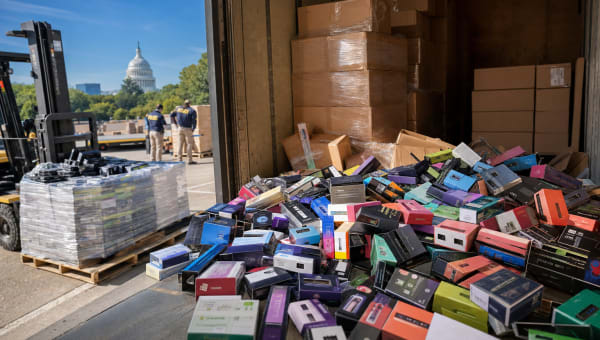
The United Kingdom's Tobacco and Vapes Act 2026 received Royal Assent on April 29, 2026, making it illegal to sell tobacco to anyone born on or after January 1, 2009 and tightening the rules on vape advertising, packaging and retail. The Department of Health and Social Care (DHSC) confirmed the Bill, first introduced as the Tobacco and Vapes Bill, completed its parliamentary passage as 2026 chapter 18, the most significant UK tobacco control statute in a generation. The smokefree generation measure commences on January 1, 2027, while the vape, licensing and smoke-free place powers follow a phased commencement set out in regulations.
Smoking causes around 80,000 deaths a year in the UK and remains the leading preventable cause of death. The Act delivers a core government manifesto commitment and anchors the prevention strand of the 10 Year Health Plan, alongside record funding for stop-smoking services supporting the UK's 5.3 million smokers to quit.
Who can no longer be sold tobacco, and from when?
From January 1, 2027, it is an offence to sell tobacco products to anyone born on or after January 1, 2009. The threshold is progressive: the cohort legally old enough to buy tobacco rises with the calendar, so today's children will never lawfully be sold cigarettes. That is the mechanism behind the smokefree generation label. It does not criminalise possession by adults who already smoke, nor does it force existing smokers to quit; it removes the legal route to sale for each successive cohort as they come of age.
The obligation falls on retailers and their staff, who must verify date of birth against the 2009 cutoff rather than only the existing 18 age gate. Trading Standards, which enforces underage sales locally, will apply the new threshold through test purchasing and age-verification checks, meaning point-of-sale systems and staff training need to move from a fixed age to a moving birth-year rule.
What new restrictions apply to vapes and nicotine products?
The Act bans the advertising and sponsorship of vapes and nicotine products, bringing marketing controls closer to the regime that already governs tobacco. It also grants powers to restrict the packaging, branding and display of these products where features are designed to appeal to children, targeting the flavours, imagery and shelf placement blamed for the rise in youth vaping.
Unlike the tobacco sale ban, these vape and nicotine provisions are not fixed to a single January 2027 date. They are exercised through secondary regulations, so compliance teams should track commencement orders rather than rely on the Act's headline date. The policy intent, set out in the DHSC announcement, is to keep vapes accessible to adult smokers trying to quit while removing child-facing appeal.
How does the Act strengthen enforcement and retail licensing?
The Act introduces stronger enforcement powers, including a retail licensing scheme for sellers of tobacco and vape products and new tools against illicit trade. A licensing regime means Trading Standards can condition, suspend or revoke the right to sell, moving UK tobacco and vape retail from a notification-based model toward permission-based control similar to alcohol licensing.
Local authorities have welcomed the scheme but warned, through the Local Government Association, that councils must be resourced to enforce it, run stop-smoking services and act against rogue traders. Manufacturers and distributors should expect due-diligence and supply-chain controls to tighten as licensing beds in, and should map their retail estate now against the coming licence requirements.
What smoke-free place changes are coming?
The Act gives powers to strengthen smoke-free protections in certain public places, with particular attention to protecting children and medically vulnerable people from second-hand smoke. On February 13, 2026, the government opened a consultation on extending existing indoor smoke-free places to certain outdoor settings and on creating new heated-tobacco and vape-free places, including around schools and hospitals.
Facilities and estates teams should treat the consultation as the leading indicator of where the next obligations will land, since the Act itself enables rather than specifies the final list of places. Venues that already comply with indoor smoke-free law should audit their perimeters, entrances and outdoor seating ahead of the regulations.
| Obligation | Trigger | Compliance date |
|---|---|---|
| Tobacco sale ban for the 2009 cohort | Royal Assent, April 29, 2026 | January 1, 2027 |
| Vape and nicotine advertising and sponsorship ban | Commencement regulations | To be appointed |
| Packaging, branding and display restrictions | Commencement regulations | To be appointed |
| Retail licensing scheme for tobacco and vapes | Commencement regulations | To be appointed |
| Extended smoke-free and vape-free places | Consultation opened February 13, 2026 | Subject to regulations |
Follow this topic in real time with a free monitoring job
What to do next: compliance leads at UK tobacco, vape and nicotine-product manufacturers, distributors and licensed retailers should confirm whether the January 1, 2027 tobacco sale threshold affects their point-of-sale and age-verification systems, audit marketing spend against the coming vape advertising and sponsorship ban, map the retail estate against the future licensing scheme, and track the smoke-free place consultation for venues and estates. Obsidian surfaces each commencement instrument the moment it publishes, so teams act on the binding date rather than the enabling Act.